














India is witnessing a significant shift in how people perceive and respond to their health, with more individuals reporting illnesses and seeking medical care than before. According to the latest findings from the National Statistical Office’s (NSO) 80th round health survey, this rise in reported ailments is not necessarily a sign of worsening health, but rather an indicator of improved awareness and better access to healthcare services.
The survey highlights that the proportion of people reporting illnesses—referred to as the Proportion of Population Reporting Ailments (PPRA)—has nearly doubled compared to the previous survey cycle conducted in 2017–18. In rural areas, reported ailments increased from 6.8% to 12.2%, while urban areas saw a rise from 9.1% to 14.9%. These figures reflect a growing willingness among individuals to acknowledge symptoms and seek timely medical attention.
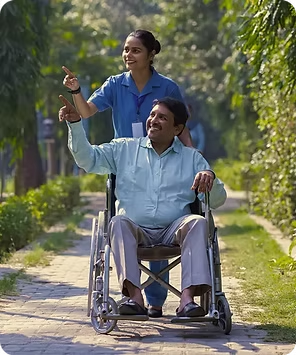
Experts suggest that this trend marks a positive behavioural change. In the past, many illnesses in India often went unreported due to lack of awareness, limited access to healthcare, or financial constraints. Now, with expanding healthcare infrastructure and greater outreach, more people are identifying health issues early and approaching medical facilities for treatment.
One of the major drivers of this change is the improved availability of healthcare services across the country. Government initiatives have significantly strengthened primary, secondary, and tertiary healthcare systems. The establishment of over 1.84 lakh Ayushman Arogya Mandirs has played a key role in bringing healthcare closer to communities, especially in rural and underserved regions.
Affordability has also contributed to increased healthcare utilisation. The survey indicates that the median out-of-pocket expenditure for outpatient care in public health facilities is now effectively zero, allowing a large section of the population to access basic services without financial burden. Similarly, hospitalisation costs in public facilities remain relatively low, with more than half of patients spending around ₹1,100 or less.
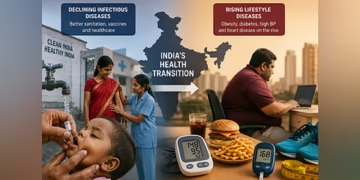
Another important factor behind the rise in reported illnesses is the changing disease pattern in India. While infectious diseases are gradually declining, non-communicable diseases such as diabetes and cardiovascular conditions are becoming more prevalent. These chronic conditions require regular monitoring and early diagnosis, which naturally leads to higher reporting of health issues.
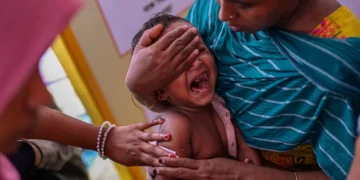
The survey also reflects improved health-seeking behaviour among citizens. More individuals are now proactive about their health, choosing to seek medical advice at earlier stages rather than delaying treatment. This shift is considered crucial for better health outcomes, as early detection often leads to more effective and less costly treatment.
Overall, the increase in reported illnesses should be viewed as a positive development rather than a cause for concern. It signals growing health awareness, improved accessibility, and a stronger healthcare system. While challenges such as uneven quality of care and financial burdens in private healthcare still persist, the trend points toward a more informed and health-conscious population in India.