











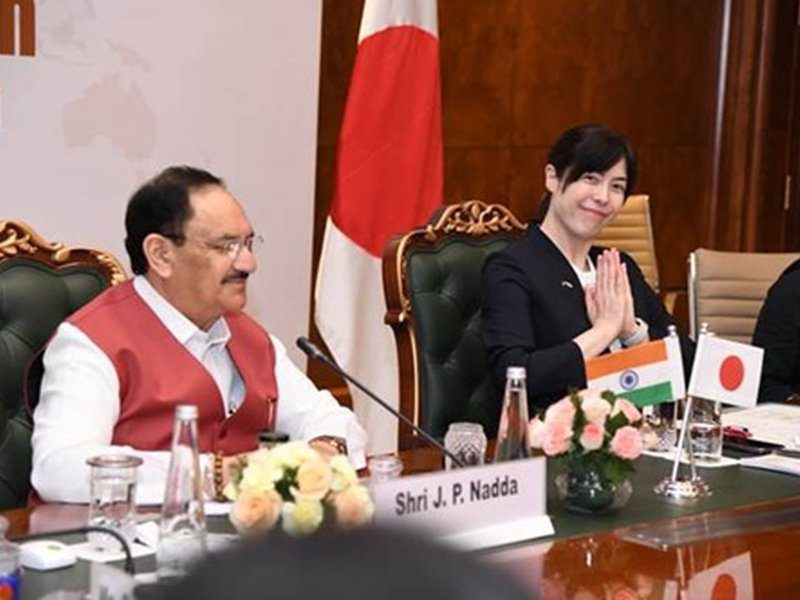
India and Japan have reaffirmed their commitment to strengthening healthcare systems and building resilient medical supply chains, marking another step forward in their growing strategic partnership. This development came during the third Joint Committee Meeting (JCM) on Healthcare held in New Delhi, where both nations discussed expanding collaboration across key areas such as digital health, medical innovation, and workforce development.
The meeting was co-chaired by India’s Union Health Minister Jagat Prakash Nadda and Japan’s Minister in charge of Healthcare Policy, Kimi Onoda. Both leaders emphasized the importance of deeper cooperation to address evolving healthcare challenges and improve access to quality services. The dialogue highlighted a shared vision of strengthening healthcare infrastructure while ensuring that advancements in technology and innovation benefit broader populations.
India noted that its healthcare partnership with Japan is guided by an existing Memorandum of Cooperation in Healthcare and Wellness. This framework focuses on enhancing accessibility, improving health outcomes, and promoting innovation. The collaboration aligns with India’s broader development agenda, which seeks inclusive growth and equitable access to essential services.
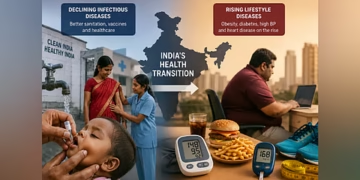
A major focus of the discussions was the growing burden of non-communicable diseases (NCDs), which continue to pose significant public health challenges. India presented its comprehensive strategy to address these issues through early screening, continuous care, and preventive health measures aligned with global sustainable development goals. Japan, on its part, shared its expertise in areas such as cancer screening, early diagnosis, and capacity-building initiatives, reinforcing the potential for knowledge exchange between the two countries.
Supply chain resilience emerged as another critical area of collaboration. The COVID-19 pandemic and global disruptions have exposed vulnerabilities in medical supply systems, making it essential for countries to strengthen production capabilities and diversify sourcing. India highlighted its strong pharmaceutical and medical device manufacturing base, along with ongoing efforts to ensure affordable access to essential healthcare products. Japan contributed insights into its model of public-private partnerships that enhance efficiency and reliability in supply chains.
Digital health also featured prominently in the discussions. India showcased its Ayushman Bharat Digital Mission, which aims to create a unified and interoperable digital health ecosystem centered on citizens. This initiative enables better data management, improved service delivery, and more efficient healthcare systems. Japan, meanwhile, shared advancements in healthcare digitalisation, including the use of artificial intelligence and collaborative research initiatives to improve patient care and system efficiency.
Human resource development was another key pillar of the dialogue. India emphasized its large and skilled healthcare workforce and ongoing exchange programmes, while Japan highlighted opportunities for joint research, training, and professional exchanges. These efforts are expected to enhance capabilities on both sides and foster innovation in healthcare delivery.
Overall, the meeting underscored the deepening partnership between India and Japan in the healthcare sector. By combining India’s scale and manufacturing strength with Japan’s technological expertise and innovation, both countries aim to build more robust, inclusive, and future-ready healthcare systems. This collaboration not only addresses immediate challenges but also lays the foundation for long-term resilience and improved global health outcomes.