














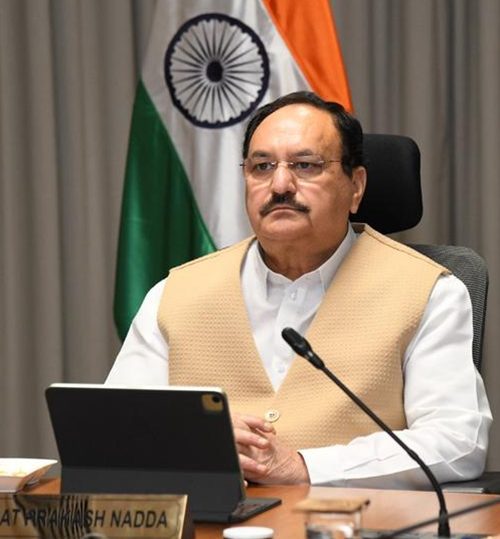
Union Health Minister Jagat Prakash Nadda has launched the Integrated Training for Primary Healthcare Teams initiative to strengthen frontline healthcare services and improve the quality of medical care delivery across India. The programme aims to create a more skilled, confident, and responsive healthcare workforce capable of providing comprehensive healthcare services at the grassroots level.
The initiative marks a major shift from fragmented and programme-specific training systems to a single, structured, and competency-driven framework. According to the Health Ministry, the new model is designed to simplify learning processes while equipping frontline health workers to deliver holistic and people-centred care closer to communities.
The Integrated Training programme was launched during the 10th National Summit on Innovation and Inclusivity: Best Practices Shaping India’s Health Future. The summit served as a platform for states and Union Territories to showcase innovative healthcare practices and discuss strategies for strengthening public health systems across the country.
The Health Ministry stated that the programme will help frontline healthcare providers deliver services ranging from disease prevention and early diagnosis to treatment and follow-up care. Officials said the initiative would ensure that people receive timely and quality healthcare closer to their homes, thereby reducing pressure on higher-level healthcare facilities.
India has significantly expanded investments in healthcare infrastructure and community-based healthcare systems in recent years. Under the Ayushman Bharat programme, Ayushman Arogya Mandirs have emerged as centres for preventive, promotive, and curative healthcare services. The new training initiative is expected to further strengthen these healthcare systems by improving the capabilities of healthcare teams working at the primary level.
The programme will also leverage digital learning platforms such as iGOT Karmayogi for continuous skill development and online learning. Officials believe digital training tools will help healthcare workers remain adaptive and prepared for emerging public health challenges. The use of technology is expected to improve the reach and effectiveness of training across different regions of the country.
A major focus of the initiative is empowering women healthcare workers, who form more than 70% of India’s primary healthcare workforce. This includes Accredited Social Health Activists (ASHAs), Auxiliary Nurse Midwives (ANMs), and Community Health Officers (CHOs). The government said strengthening the skills and confidence of women healthcare workers would help improve healthcare delivery at the community level while promoting inclusive and responsive care systems.
The ministry highlighted that frontline healthcare teams often work in challenging conditions and play a critical role in ensuring healthcare access in rural and underserved areas. A well-trained workforce is considered essential for improving the quality of care, building public trust in healthcare institutions, and reducing the burden on hospitals and specialised medical facilities.
Officials said the initiative aligns with India’s broader vision of achieving universal and equitable healthcare access while moving towards the Sustainable Development Goals and the goal of a developed India by 2047. The government believes strengthening primary healthcare systems is necessary to build a healthier and more productive population.
Prime Minister Narendra Modi has repeatedly emphasised that healthcare services must reach the “last mile” and remain accessible to every citizen regardless of location. The Integrated Training initiative reflects this vision by focusing on community-centred healthcare delivery and strengthening the country’s frontline medical workforce.
The Health Ministry described the Integrated Training Modules as a strategic investment in the future of public health in India. Authorities believe the initiative will improve healthcare outcomes, strengthen trust between communities and the public health system, and support the development of a more resilient healthcare infrastructure nationwide.