
















Global health experts are warning that delayed access to vaccines continues to pose a serious threat to international public health, especially as infectious disease outbreaks become more frequent and widespread. Recent outbreaks of Ebola and mpox have once again exposed deep inequalities in global healthcare systems, where low-income nations often struggle to obtain vaccines and treatments on time despite being at the centre of disease outbreaks.
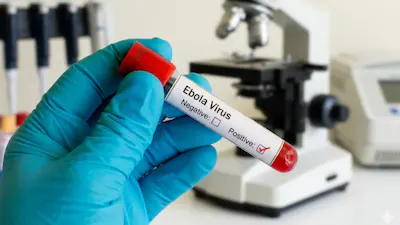
According to a recent report published by NDTV, the ongoing Ebola outbreak in the Democratic Republic of Congo (DRC) and Uganda has highlighted the dangers of slow vaccine development and unequal healthcare access. The outbreak involves the rare Bundibugyo strain of Ebola, for which there is currently no approved vaccine. Health authorities estimate that promising vaccine candidates may still take several months before they are ready for wider clinical use. Meanwhile, suspected cases and deaths continue to rise across affected regions.
The World Health Organization (WHO) recently declared the Ebola outbreak a global public health emergency due to concerns about cross-border transmission and the lack of effective medical countermeasures. Reports indicate that the virus circulated undetected for several weeks before authorities correctly identified the strain, allowing infections to spread through transport networks and neighbouring countries. Faulty diagnostic testing and delayed surveillance further worsened the crisis.
Experts stress that vaccine delays can significantly increase the severity of outbreaks. When vaccines are unavailable or arrive late, infections spread faster, healthcare systems become overwhelmed, and public fear and misinformation grow. Delayed vaccination also makes contact tracing more difficult and increases the risk of international transmission through migration and travel. Vulnerable groups such as children, pregnant women, and immunocompromised individuals face the greatest danger during such outbreaks.
The recent mpox outbreaks have similarly exposed global vaccine inequality. Although vaccines for mpox already existed, many African countries reportedly waited nearly two years before receiving significant vaccine supplies. Health experts argue that wealthier countries secured doses rapidly while poorer nations struggled with limited access despite facing the highest infection burden. The situation renewed criticism of global healthcare systems that continue to favour high-income nations during public health emergencies.
Researchers also warn that infectious diseases are evolving rapidly. WHO officials have recently identified recombinant strains of mpox, where different viral variants combine genetically, potentially complicating diagnosis, surveillance, and vaccination strategies in the future. Increasing urbanisation, climate change, deforestation, conflict, and rising global travel are also contributing to the growing frequency and spread of outbreaks worldwide.
Health experts believe the lessons from Covid-19, Ebola, and mpox demonstrate that scientific breakthroughs alone are not enough to prevent pandemics. Even when vaccines exist, unequal distribution and delayed approvals can weaken outbreak control efforts. The Global Preparedness Monitoring Board has warned that the world is still not adequately prepared for future pandemics despite advancements in vaccine technologies such as mRNA platforms.
India is also considered vulnerable to emerging infectious diseases because of its large population, dense urban centres, and extensive international travel connections. Experts say the country has strengthened healthcare systems significantly since the Covid-19 pandemic, but continued investment in disease surveillance, genomic sequencing, laboratory networks, and emergency stockpiles remains essential. Faster regulatory approvals, stronger airport screening, and international collaboration are also being viewed as critical components of future preparedness.
Global health agencies are now calling for stronger international cooperation to ensure faster vaccine research, transparent data sharing, and fair distribution of vaccines and treatments during emergencies. Experts believe outbreaks such as Ebola and mpox are reminders that infectious diseases do not respect national borders, and delays in one region can quickly become risks for the entire world.