

















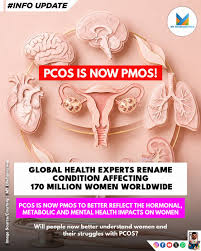
A major change in women’s healthcare terminology has officially renamed Polycystic Ovary Syndrome (PCOS) as Polyendocrine Metabolic Ovarian Syndrome (PMOS). The updated name is expected to improve awareness, diagnosis, and treatment by highlighting the condition’s broader hormonal and metabolic effects rather than focusing only on the ovaries.
The decision follows a 14-year international effort involving medical experts, researchers, and thousands of women living with the condition. The announcement was made during the European Congress of Endocrinology and published in The Lancet. Professor Helena Teede of Monash University, who led the initiative, said the old name had long been considered misleading because many patients with the disorder do not actually develop ovarian cysts.
Experts explained that the term “polycystic” often caused confusion among both patients and healthcare providers. In many cases, women were incorrectly diagnosed or dismissed because scans did not show ovarian cysts. Researchers clarified that what appear as cysts are often immature follicles rather than abnormal cyst formations.
The new name, PMOS, better reflects the condition’s complex nature. “Polyendocrine” refers to the multiple hormonal systems involved, while “metabolic” highlights problems such as insulin resistance, obesity, and increased risk of type 2 diabetes and heart disease. “Ovarian” remains part of the name because reproductive health and fertility are still key aspects of the condition.
PMOS affects more than 170 million women globally and is considered one of the most common hormonal disorders among women of reproductive age. Symptoms can include irregular periods, acne, excess facial or body hair, weight gain, thinning hair, infertility, and mental health challenges such as anxiety and depression.
Medical professionals believe the updated terminology could encourage earlier diagnosis and more comprehensive care. By recognising PMOS as a multi-system disorder instead of only a reproductive condition, doctors may focus more on long-term metabolic and psychological health risks.
The name change has also received positive reactions from patient communities online. Many women shared that the previous term failed to capture the seriousness of their symptoms and often led to misunderstanding or delayed treatment. Discussions on social media platforms and support forums showed strong support for terminology that reflects the condition’s full-body impact.
Despite the new name, experts noted that diagnostic criteria and treatments will remain largely unchanged for now. Lifestyle management, hormonal therapy, fertility support, and metabolic treatments will continue to be central to patient care. However, the updated terminology may help guide future research and improve medical education worldwide.
Health organisations and medical bodies are expected to gradually adopt the new terminology over the next three years, with PMOS likely to appear officially in updated international guidelines by 2028. Researchers hope the shift will reduce stigma, improve public understanding, and ensure women receive more accurate and holistic healthcare.