

















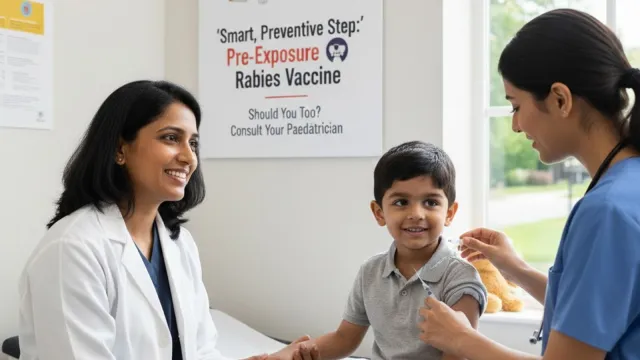
A Delhi-led study has found that a simpler, single-visit rabies vaccination approach may provide children with early protection against the deadly disease, including in situations where a minor animal bite is not noticed or reported. Researchers say the findings could support further study of easier vaccination programmes for children.
The study, conducted between 2024 and 2025, involved 48 children aged 2 to 15 years and examined a two-site intradermal pre-exposure rabies vaccination regimen. Researchers assessed antibody levels at 28 days and around six months after vaccination.
)
The results showed that 40 of 44 children assessed at day 28, or 90.9%, developed protective antibody levels. By six months, 27 of 40 children assessed still had protective antibody levels. Children whose antibody levels were below the protective threshold received two booster doses. All of them developed a protective response within seven days. The study also reported that the vaccination regimen was well tolerated, with only mild local side effects.
Why the study matters
Rabies remains a major public-health concern, particularly for children. Researchers said pre-exposure vaccination could provide an added layer of protection because young children may not always recognise or report minor bites or scratches.
If a previously vaccinated child is exposed to rabies later, the study’s approach could mean that only two booster doses, on days 0 and 3, are needed, while rabies immunoglobulin would not be required under the studied approach.
Anurag Agarwal of Maulana Azad Medical College (MAMC), one of the researchers, told The Times of India: “Even a single dose gives you a good amount of protection. Larger studies are needed, but this small study shows that it is a possibility that vaccination can provide protection.”
The researchers said the simpler approach could potentially be delivered through schools and community programmes. However, they stressed that the study was small and does not establish that the regimen should replace existing vaccination schedules. Larger, controlled studies are needed before any policy change is considered.
For more health-related news