




















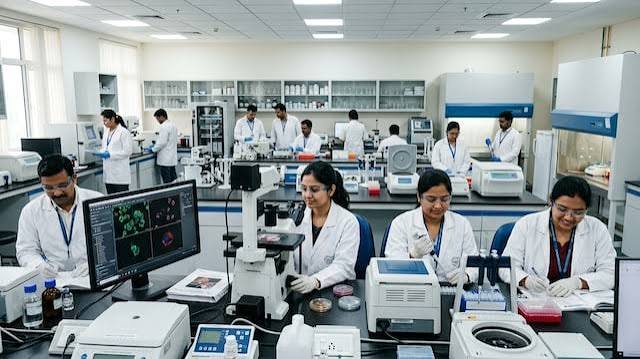
The Government of India has released the draft National Health Research Policy 2026, proposing a comprehensive overhaul of the country’s health research ecosystem to better align scientific research with national public health priorities. The policy aims to build a more inclusive, ethical, innovation-driven and impact-oriented research framework that generates evidence-based solutions for India’s evolving healthcare challenges while strengthening indigenous capabilities.
The proposed policy introduces the National Health Research Agenda as the central framework for identifying and prioritising research areas based on the country’s disease burden and emerging health concerns. By focusing on issues of greatest public health importance, the government intends to ensure that research investments deliver measurable improvements in healthcare outcomes, disease prevention and policy formulation. The agenda will guide funding decisions, encourage collaboration among stakeholders and minimise duplication of research efforts.
A key objective of the draft policy is to create a research ecosystem that is responsive to the needs of patients and communities rather than being driven solely by academic interests. It seeks to promote high-quality, ethical and multidisciplinary research while encouraging innovation in diagnostics, medical devices, vaccines, therapeutics and digital health technologies. The policy also emphasises translating research findings into practical healthcare interventions and public policies that can improve access, affordability and quality of care across the country.
The policy proposes simplifying administrative processes to enable faster approvals for research projects while maintaining strong ethical oversight. It encourages greater collaboration among government institutions, medical colleges, universities, research organisations, industry partners and international agencies. Such partnerships are expected to accelerate scientific discovery, improve knowledge sharing and strengthen India’s capacity to respond to current and future public health emergencies.
Another major focus area is strengthening research infrastructure and human resource development. The government plans to invest in advanced laboratories, data platforms, biobanks and digital research systems while building the capacity of scientists, clinicians and public health professionals. The draft also highlights the importance of promoting innovation among young researchers through mentorship, funding support and improved career opportunities, ensuring a steady pipeline of skilled professionals in health research.
The proposed framework further underscores the need for transparency, accountability and responsible data governance. It advocates the use of secure digital platforms for data collection and sharing, while ensuring privacy, ethical standards and public trust. The policy also supports open science practices and encourages wider dissemination of research findings to maximise their societal impact.
To improve preparedness for future health threats, the draft policy calls for stronger surveillance systems and coordinated research on infectious diseases, antimicrobial resistance, non-communicable diseases, environmental health and emerging health risks. It also seeks to promote implementation research that evaluates how healthcare programmes perform in real-world settings, enabling policymakers to make informed decisions based on scientific evidence.
The Ministry of Health and Family Welfare has invited comments and suggestions from researchers, healthcare professionals, academic institutions, industry and the general public before finalising the policy. Once implemented, the National Health Research Policy 2026 is expected to serve as a roadmap for building a resilient, self-reliant and globally competitive health research ecosystem capable of addressing India’s present and future healthcare needs through innovation, collaboration and evidence-based policymaking.