



















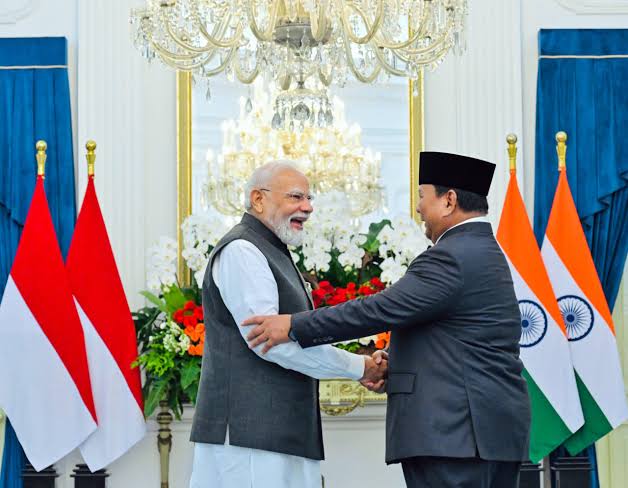
India and Indonesia have agreed to deepen their Comprehensive Strategic Partnership by expanding cooperation across healthcare, pharmaceuticals, food security, agriculture, clean energy, and critical minerals. The commitment was reaffirmed during Prime Minister Narendra Modi’s state visit to Indonesia, where he held bilateral talks with Indonesian President Prabowo Subianto. The leaders outlined a broad roadmap aimed at strengthening economic resilience, enhancing regional stability, and promoting sustainable development through closer collaboration in key strategic sectors.
Healthcare and pharmaceuticals emerged as major pillars of the strengthened partnership. Both countries agreed to increase collaboration in public health, medical research, pharmaceutical manufacturing, vaccine production, and healthcare innovation. The initiative seeks to improve access to affordable medicines, strengthen healthcare delivery systems, and encourage joint research and development. The two sides also emphasized cooperation in medical technology, capacity building, and the exchange of best practices to address future public health challenges more effectively.
Food security and agriculture also featured prominently in the discussions. India and Indonesia agreed to work together on improving agricultural productivity, enhancing food supply chains, and promoting sustainable farming practices. The partnership will include collaboration in fertilizers, agricultural technology, food processing, and research aimed at ensuring long-term food security for both nations. The leaders stressed the importance of resilient agricultural systems in the face of climate change and global supply chain disruptions.
Energy cooperation received renewed attention, with both countries expressing interest in expanding collaboration in renewable energy, biofuels, and clean energy technologies. They also agreed to explore opportunities in energy transition initiatives that support climate goals while strengthening energy security. Cooperation in critical minerals, which are essential for electric vehicles, batteries, and renewable energy technologies, was identified as another strategic priority. Both sides pledged to build resilient supply chains and encourage investments in mineral processing and value addition.
The leaders further agreed to strengthen economic engagement through increased trade, investment, and industrial collaboration. They discussed opportunities for businesses in sectors such as manufacturing, digital technology, infrastructure, maritime industries, and innovation. Both countries reaffirmed their commitment to creating a business-friendly environment that encourages private sector participation and supports long-term economic growth. They also emphasized the importance of improving connectivity and facilitating greater cooperation between industries and research institutions.
Beyond economic cooperation, India and Indonesia reiterated their shared commitment to maintaining peace, security, and stability in the Indo-Pacific region. The two leaders emphasized adherence to a rules-based international order, freedom of navigation, and stronger maritime cooperation. They also agreed to continue working closely on regional and global issues through multilateral platforms while advancing partnerships that benefit the broader Global South.
The expanded partnership reflects the growing strategic importance of India-Indonesia relations at a time when both countries are seeking to build resilient supply chains, strengthen healthcare systems, enhance food and energy security, and accelerate sustainable economic development. By broadening cooperation across multiple sectors, the two nations aim to create long-term opportunities for innovation, investment, and inclusive growth while reinforcing their role as key partners in the Indo-Pacific region.