

















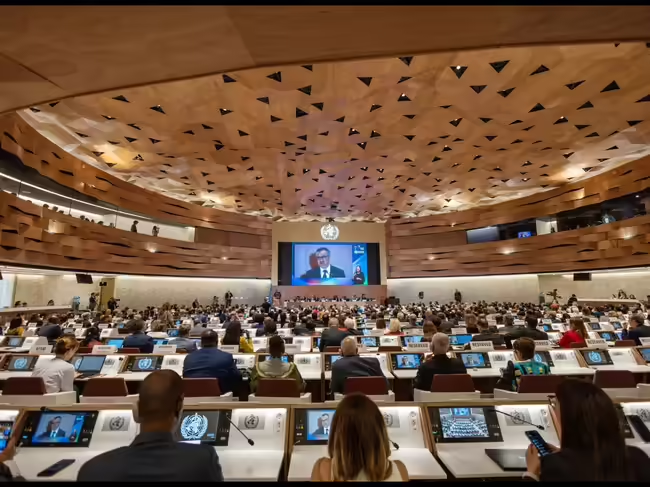
The 79th World Health Assembly (WHA) began in Geneva amid growing concerns over emerging global health threats, including Ebola outbreaks in Africa and hantavirus infections linked to international travel. Health leaders from across the world gathered for the annual meeting of the World Health Organization to discuss urgent public health challenges, disease preparedness, healthcare financing, and international cooperation.
A major concern at the assembly is the recent Ebola outbreak caused by the rare Bundibugyo strain of the virus in the Democratic Republic of Congo (DRC) and Uganda. The WHO has already declared the outbreak a “Public Health Emergency of International Concern” due to fears of cross-border spread and the lack of approved vaccines or treatments for this strain. As of mid-May 2026, authorities reported confirmed cases, hundreds of suspected infections, and dozens of deaths.
Health officials are particularly worried because the Bundibugyo strain differs from the more common Ebola-Zaire strain, for which vaccines and therapies already exist. WHO experts warned that the current outbreak may be significantly larger than officially detected, especially in conflict-hit regions where healthcare systems are weak and disease surveillance remains difficult.
The situation has become more alarming after cases were identified in urban centres such as Kampala in Uganda and Kinshasa in the DRC. Experts fear that rapid population movement, humanitarian crises, and overcrowded health facilities could accelerate transmission. Reports also indicate infections among healthcare workers, highlighting gaps in infection prevention and control.
Alongside Ebola, delegates at the assembly are also monitoring concerns related to hantavirus outbreaks. International attention increased after cases linked to a cruise ship travelling from Argentina resulted in multiple deaths and infections across several countries. Investigators suspect the outbreak may be connected to exposure to rodents carrying the Andes virus strain of hantavirus.
The hantavirus situation has renewed discussions on how infectious diseases can spread rapidly through international travel and tourism. Public health experts stressed the need for stronger surveillance systems, early detection mechanisms, and coordinated emergency responses to contain future outbreaks.
This year’s World Health Assembly is also taking place amid financial and political uncertainty for the WHO. The organisation is facing budget pressures after the withdrawal of some member countries, including the United States and Argentina, creating concerns about long-term global health funding. WHO Director-General Tedros Adhanom Ghebreyesus has urged nations to strengthen international solidarity and invest more in pandemic preparedness and healthcare resilience.
The six-day assembly, running from May 18 to May 23 in Geneva, will include discussions on pandemic agreements, global disease surveillance, healthcare access, and emergency response systems. Delegates are expected to focus heavily on improving preparedness for future outbreaks in a world still recovering from the long-term effects of the COVID-19 pandemic.