


















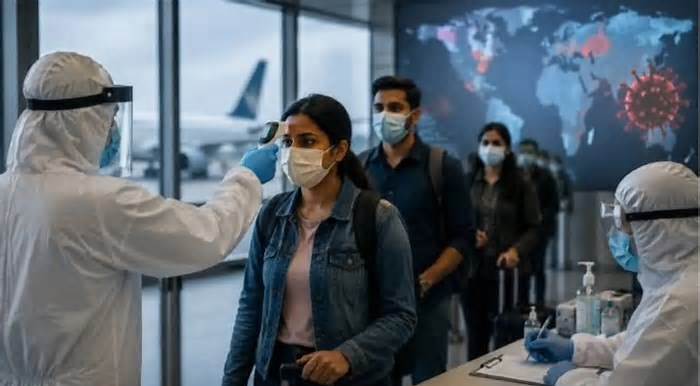
India has intensified health surveillance measures at airports, seaports, and other international entry points following concerns over the spread of Ebola in parts of Central Africa. The Union Health Ministry has issued fresh screening guidelines for travellers arriving from or transiting through high-risk countries such as the Democratic Republic of Congo, Uganda, and South Sudan.
According to the advisory, passengers showing symptoms including fever, fatigue, headache, muscle pain, vomiting, diarrhoea, sore throat, or unexplained bleeding have been asked to immediately report to airport health officers or designated health desks before immigration clearance. Officials say the move is precautionary and aimed at preventing imported infections despite there being no confirmed Ebola cases in India at present.
The Health Ministry has reviewed standard operating procedures related to screening, quarantine, surveillance, and case management. Authorities are also strengthening monitoring systems at major airports and ports while coordinating with immigration officials and international travel agencies to track passengers arriving from affected regions.
India’s preparedness measures come after the World Health Organization expressed concern about the scale and speed of the ongoing Ebola outbreak in parts of Africa. Reports indicate rising suspected and confirmed cases in the Democratic Republic of Congo and neighbouring Uganda. Health experts warn that delayed detection may increase the risk of further spread, making early surveillance crucial for countries with international travel connectivity.
The government has designated the National Institute of Virology (NIV) in Pune as the primary laboratory for Ebola testing, while additional laboratories may be added in phases if required. Isolation and quarantine facilities are also being identified and prepared at key ports and airports across the country.
Senior health officials have stated that India’s public health system remains vigilant and well prepared due to its experience handling infectious disease outbreaks such as COVID-19, Nipah virus, and monkeypox. Agencies including the National Centre for Disease Control (NCDC), Integrated Disease Surveillance Programme (IDSP), and the Indian Council of Medical Research (ICMR) are closely monitoring the evolving global situation.
Medical experts emphasise that Ebola spreads differently from airborne viruses like COVID-19. The disease is transmitted mainly through direct contact with the blood, body fluids, or contaminated materials of infected individuals. Close physical interaction and inadequate infection-control practices are considered major risk factors for transmission.
Doctors say there is currently no reason for panic in India, as Ebola does not spread casually through the air or ordinary social interaction. However, authorities are urging travellers to remain cautious and avoid close contact with sick individuals or contaminated materials when visiting affected African regions. Maintaining hand hygiene and following official health advisories are being recommended as basic preventive measures.
The World Health Organization has reportedly described the outbreak as a major international concern due to the increasing number of suspected infections and deaths linked to a rare strain of the Ebola virus. International health agencies are expanding surveillance, laboratory testing, and contact-tracing efforts in affected regions to contain the outbreak.
Indian authorities have also advised the public and media organisations not to spread misinformation or panic regarding the situation. Officials say the country’s health infrastructure and surveillance mechanisms are actively monitoring developments and that all necessary precautionary measures are being taken to safeguard public health.