











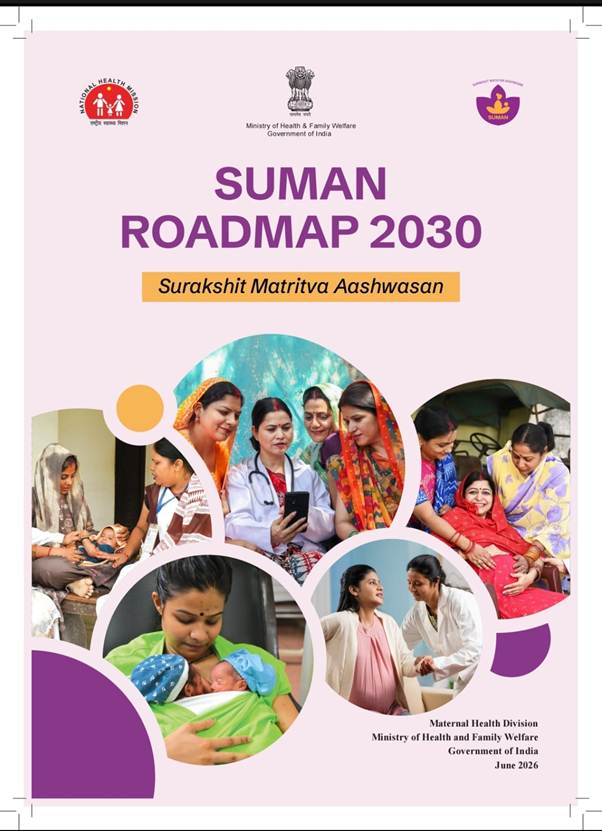
The Union Ministry of Health and Family Welfare has launched the SUMAN Roadmap 2030, a comprehensive national strategy aimed at accelerating progress in maternal and newborn healthcare while working towards the Sustainable Development Goals (SDGs) of reducing maternal and neonatal deaths by the end of the decade. The framework seeks to strengthen healthcare delivery across the entire continuum of care, from pre-pregnancy counselling to postnatal support, with a special focus on underserved regions and high-risk pregnancies.
The roadmap outlines a series of evidence-based interventions designed to improve access to quality maternal and newborn services across all states and Union Territories. It adopts a life-cycle approach that integrates pre-pregnancy care, antenatal services, safe childbirth, postnatal care, family planning, nutrition and newborn health into a unified strategy. The initiative is expected to help India achieve its target of reducing the Maternal Mortality Ratio below 70 per 100,000 live births while also lowering neonatal and infant mortality rates by 2030.
A key component of the roadmap is the introduction of a dedicated SUMAN Package for Pregnant Women, which promotes early pregnancy registration, comprehensive antenatal check-ups, institutional deliveries and structured postnatal follow-up. The strategy also proposes bi-weekly home visits by Accredited Social Health Activists (ASHAs) during the final months of pregnancy to ensure timely identification of complications and continuous support for expectant mothers. Financial assistance for caregivers during the postnatal period has also been incorporated to improve maternal recovery and newborn care.
To strengthen healthcare infrastructure, the roadmap calls for the expansion of Maternal and Child Health Wings, Birth Waiting Homes, Obstetric High Dependency Units (HDUs) and Intensive Care Units (ICUs), particularly in remote and underserved districts. Improved referral transport systems have also been proposed to ensure timely access to emergency obstetric care for women facing complications during pregnancy and childbirth.
The strategy places strong emphasis on preventive healthcare. It recommends pre-pregnancy folic acid supplementation, expanded nutrition interventions to combat maternal anaemia and enhanced surveillance of high-risk pregnancies. Community-based initiatives such as SUMAN Panchayats are expected to promote awareness, encourage early healthcare seeking and strengthen local participation in maternal health programmes.
Technology forms an important pillar of the new framework. The ministry plans to introduce AI-enabled labour rooms to support clinical decision-making and improve patient monitoring during childbirth. The JANANI Portal will facilitate digital tracking of maternal and newborn health services, enabling real-time monitoring of pregnancies, institutional deliveries and postnatal care. Climate-responsive planning has also been incorporated to ensure continuity of services during extreme weather events and other emergencies affecting vulnerable populations.
The roadmap builds on existing flagship programmes such as Surakshit Matritva Aashwasan (SUMAN), Pradhan Mantri Surakshit Matritva Abhiyan (PMSMA) and LaQshya, which have contributed to expanding access to free antenatal care, improving labour room quality and ensuring respectful maternity services in public health facilities. The government expects the integrated strategy to further strengthen maternal and newborn health systems through digital innovation, community participation and evidence-based planning.
According to the Health Ministry, the SUMAN Roadmap 2030 represents a transformative step towards ensuring that every pregnant woman and newborn receives timely, quality and respectful healthcare, regardless of geography or socio-economic status. By combining infrastructure development, technology adoption, skilled healthcare delivery and community engagement, the Centre aims to eliminate preventable maternal and newborn deaths and improve health outcomes across the country by 2030.