









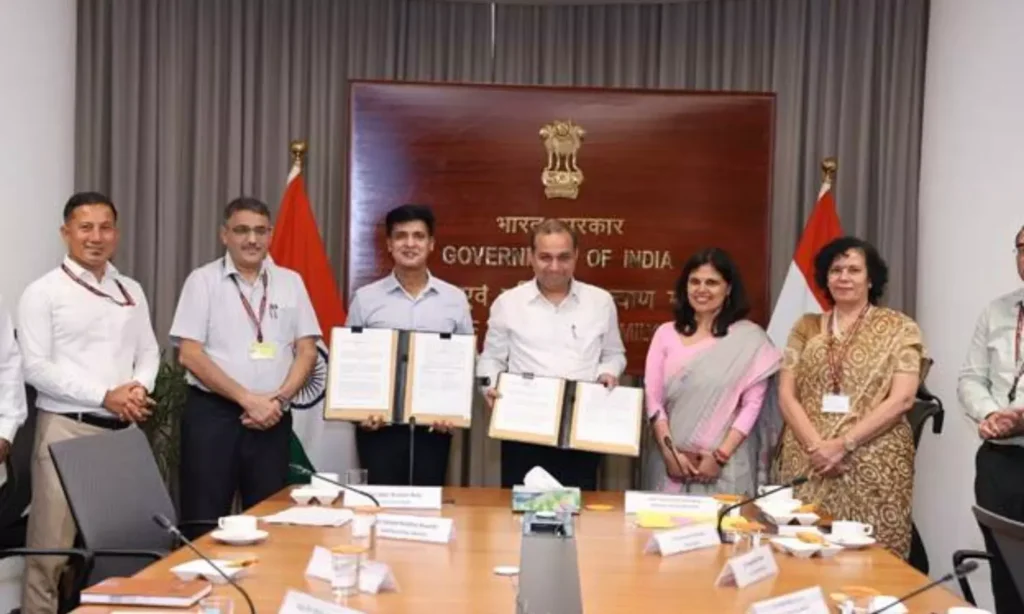
The Sports Injury Centre (SIC) at Safdarjung Hospital and the Sports Authority of India (SAI) have entered into a strategic partnership to strengthen sports medicine and specialised healthcare services for Indian athletes. The collaboration aims to provide comprehensive medical support by integrating clinical expertise with SAI’s nationwide athlete development network.
The Memorandum of Understanding (MoU) was signed in the presence of Union Health Secretary Punya Salila Srivastava and Sports Secretary Hari Ranjan Rao. Officials said the initiative marks an important step towards creating a coordinated healthcare ecosystem focused on injury prevention, diagnosis, treatment, rehabilitation, and sports science support for athletes.
Under the agreement, the two institutions will work together to improve the quality of sports medicine services while also promoting research, medical education, capacity building, and professional training. Joint research projects will focus on developing evidence-based treatment protocols, strengthening injury prevention strategies, and advancing scientific innovation to improve athlete health and performance.
Speaking at the event, Union Health Secretary Punya Salila Srivastava described the partnership as a significant contribution to India’s sporting ambitions. She said the Ministry of Health and Family Welfare would extend full support to strengthen sports medicine infrastructure across the country and called the agreement the beginning of a long-term collaboration between the health and sports sectors.
She also highlighted the need to expand sports medicine facilities beyond major centres by encouraging newer AIIMS institutions to establish specialised departments. In addition, the ministry will explore involving institutions such as NIMHANS to address athletes’ healthcare needs beyond orthopaedic injuries. Srivastava stressed the importance of increasing postgraduate education in sports medicine to build a larger pool of trained specialists.
Sports Secretary Hari Ranjan Rao emphasised the need for India-specific research in sports medicine and sports science. He noted that many existing treatment protocols and performance benchmarks are based on Western populations and may not fully reflect the physiological characteristics of Indian athletes.
Rao also proposed greater collaboration between SAI Centres of Excellence and nearby medical colleges to improve access to specialised healthcare, research opportunities, and athlete monitoring. According to him, the partnership will strengthen institutional cooperation and help create a robust support system for India’s elite sportspersons.
The Sports Injury Centre, recognised as one of India’s leading institutions dedicated to sports medicine, arthroscopy, rehabilitation, and sports sciences, is expected to play a central role in delivering advanced medical care through this collaboration. Officials believe the partnership will not only improve treatment outcomes for athletes but also contribute to the long-term development of sports medicine and scientific research in the country.