












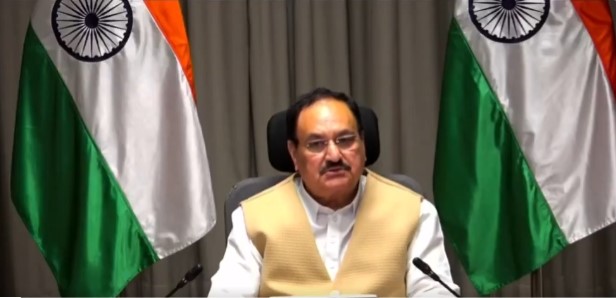
Union Health Minister Jagat Prakash Nadda has reaffirmed India’s commitment to eliminating cervical cancer as a public health challenge, highlighting the country’s comprehensive strategy focused on prevention, early detection, screening, vaccination, and timely treatment. Addressing a virtual press briefing at the World Health Organization (WHO) headquarters, Nadda emphasized that safeguarding women’s health remains a national priority and that India is strengthening both domestic healthcare initiatives and global cooperation to combat the disease.
The minister noted that cervical cancer continues to pose a significant health burden in India and across the world, prompting the government to adopt a multi-pronged approach aimed at reducing disease incidence and improving treatment outcomes. A key component of this strategy is the expansion of population-based screening services under the National Programme for Prevention and Control of Non-Communicable Diseases (NP-NCD), which has integrated cervical cancer screening into comprehensive primary healthcare services across the country.
Nadda said screening using Visual Inspection with Acetic Acid (VIA) is now available at Ayushman Arogya Mandirs and other government health facilities for women aged between 30 and 65 years. He revealed that more than 86 million women have already been screened under the national programme, reflecting India’s sustained efforts to promote early diagnosis and reduce cervical cancer-related mortality through accessible healthcare services.
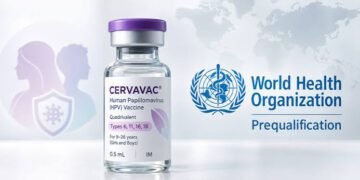
The Union Minister also highlighted the nationwide Human Papillomavirus (HPV) vaccination campaign launched earlier this year by Prime Minister Narendra Modi. The programme aims to vaccinate approximately 12 million girls aged 14 years through a 90-day campaign using a single-dose schedule of the Gardasil Quadrivalent vaccine, which is being provided free of cost at designated government health facilities. The initiative follows recommendations issued by the WHO and India’s National Technical Advisory Group on Immunization (NTAGI).
According to Nadda, the vaccination programme reflects the government’s vision of “Swasth Nari, Sashakt Parivar” by placing prevention, protection, and equitable access to healthcare at the centre of women’s health initiatives. He stressed that the campaign is voluntary and based on parental consent, ensuring community participation while respecting family choices. Digital platforms such as U-WIN and the Electronic Vaccine Intelligence Network (eVIN) are being used to monitor vaccination coverage, vaccine availability, and cold-chain management, improving transparency and operational efficiency throughout the campaign.
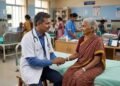
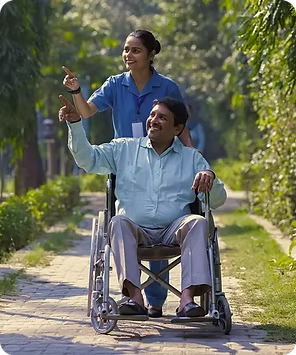
The minister also acknowledged the contribution of frontline healthcare workers in implementing screening and vaccination programmes, noting that their efforts have been instrumental in building public trust and expanding healthcare access across urban and rural communities. Their role, he said, remains critical in ensuring the success of India’s cervical cancer elimination strategy.
Reaffirming India’s global commitment, Nadda said the country fully supports the WHO Global Strategy to eliminate cervical cancer and its 90-70-90 targets for 2030. The strategy seeks to vaccinate 90% of girls against HPV, screen 70% of eligible women, and provide treatment to 90% of women diagnosed with cervical disease. WHO Director-General Dr. Tedros Adhanom Ghebreyesus commended India’s nationwide HPV vaccination programme, describing it as the world’s largest free HPV vaccination campaign and an important milestone in the global effort to eliminate cervical cancer. Through strengthened screening, expanded immunisation, and international collaboration, India aims to significantly reduce the burden of cervical cancer while improving women’s health outcomes in the years ahead.