













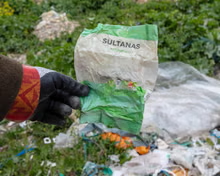
Researchers from the EU-funded Minagris project, working with the Countryside and Community Research Institute at the University of Gloucestershire, found microplastics in all 227 agricultural fields tested across 11 European countries. The findings suggest that plastic pollution in soil can remain for years and may create additional risks for farming and food production.
The research found that microplastics can interact with pesticides, veterinary drugs and other pollutants. A study in Switzerland showed that fields with high levels of tore-wear particles also contained higher levels of other toxic chemicals and metals.
Researchers said the surface of microplastics can become a home for microorganisms, creating what is known as the “plastisphere.” These surfaces can bring plastics, microbes and agricultural chemicals together. The studies also found increased levels of antibiotic-resistance genes in these microbial communities, with pesticides appearing to increase the effect.
Edoardo Puglisi, professor of microbiology at the Catholic University of the Sacred Heart in Piacenza, Italy, said smaller microplastics were particularly important because they could collect pollutants, microbes and DNA.
“The smaller the microplastics were, the more they tended to adsorb pollutants, microbes and DNA,” Puglisi said, creating a “Trojan horse effect” that could potentially increase the spread of pathogens and antibiotic-resistance genes.
The pollution may also affect soil organisms. One study found that microplastics could disrupt earthworms and other soil organisms, affecting important processes such as nutrient cycling. Earthworms are important for maintaining soil ecosystems and influencing the soil microbiome.
Plants can also be affected. Research found that higher concentrations of microplastics reduced leaf area, chlorophyll, photosynthetic efficiency and biomass in lettuce. The damage became stronger when plants were also exposed to drought.
Researchers warned that even biodegradable plastics may not always be harmless because they can break down into microplastics.
Dr Esperanza Huerta Lwanga of Wageningen University said, “Once these plastics fragment into the ground, they’re practically impossible to remove.” She called for better plastic monitoring, manufacturer transparency and wider risk assessments.
For more health-related news