






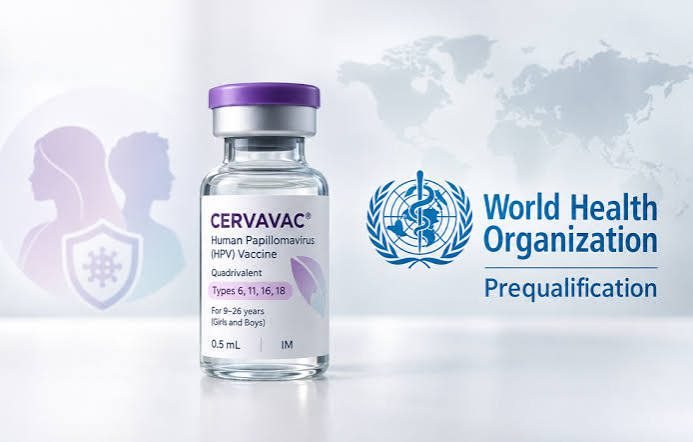
Serum Institute of India’s (SII) indigenously developed gender-neutral HPV vaccine, CERVAVAC®, has received prequalification from the World Health Organization (WHO), a key step that could help expand access to HPV vaccination for boys and girls around the world.
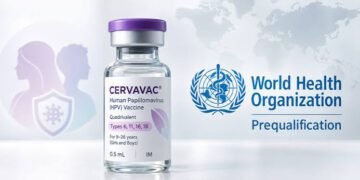
Serum Institute of India’s CERVAVAC® has received WHO prequalification, allowing the vaccine to be listed among WHO’s prequalified vaccines and making it eligible for procurement by United Nations agencies.
The milestone was announced by SII and marks the company’s 32nd WHO prequalification for its products and biologicals. The vaccine was developed in India as a gender-neutral quadrivalent HPV vaccine and targets HPV types 6, 11, 16 and 18.
CERVAVAC® is indicated for girls and boys aged 9 to 26 years. It is designed to help prevent diseases linked to the targeted HPV types, including cervical, vulvar, vaginal and anal cancers in girls and young women, as well as anal cancer in boys and young men. It also helps prevent genital warts in the applicable age groups.
Why the WHO listing matters
The WHO prequalification provides a pathway for CERVAVAC® to be considered for procurement by international agencies. This could help countries access the vaccine and potentially widen HPV prevention efforts beyond India.
Commenting on the development, Adar Poonawalla, CEO of Serum Institute of India, said, “WHO prequalification of CERVAVAC® is an important step in strengthening the global response to HPV.”
Poonawalla said the milestone reflects the vaccine’s effectiveness and creates an opportunity for countries to prevent HPV-related health risks. He added that SII was pleased to see its indigenously developed vaccine achieve the milestone and looked forward to supporting wider immunisation coverage.
CERVAVAC® had earlier received approval for use in India from the Drugs Controller General of India (DCGI). The vaccine is administered to help prevent diseases associated with the four targeted HPV types.
The WHO decision comes as countries continue to strengthen vaccination programmes aimed at preventing HPV-associated diseases and improving access to preventive healthcare for both males and females.
For more health-related news