
















A new study by researchers at NYU Langone Health has shown how a small brain circuit in fruit flies can switch short-term memory on and off, offering scientists new clues about how working memory may function in humans.
Researchers at NYU Langone Health have discovered how specific brain cells in fruit flies work together to create short-term memories. The findings were published online on October 7, 2026, in the journal Nature.
The study focused on how the brain stores information for a short time while also avoiding the need to hold unnecessary information. This ability, known as working memory, helps people remember temporary information, such as a security code, long enough to use it.

Fruit flies are useful for neuroscience research because their brains contain fewer than 200,000 neurons, compared with tens of billions in humans. Despite this difference, their brains have many similar features, including the way neurons communicate. Scientists have also fully mapped the connections, or “connectome,” between the fly’s neurons.
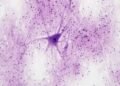
To study short-term memory, researchers exposed fruit flies to the smell of apple cider vinegar. Even after the smell disappeared, the flies continued moving toward its source for a few seconds. By monitoring their brains, scientists found that two types of neurons, called PFG and hΔK, became active together.
The researchers found that these neurons form a special circuit called a “split attractor network.” PFG neurons carry information about the memory, while hΔK neurons help control when the memory is formed. A communication block between the neurons acts like a gate, switching the memory system on or off.
“Our study shows how a neuronal circuit forms a short-term memory in response to a fly sensing an odor,” said Katherine Nagel, Ph.D., associate professor in the Department of Neuroscience at NYU Grossman School of Medicine and senior investigator of the study.
Nagel said the findings confirm a long-standing idea about how working memory operates and could help scientists better understand similar processes in humans.
The researchers now plan to study how the circuit works over different periods and how other brain regions control similar functions.
For more health-related news