



















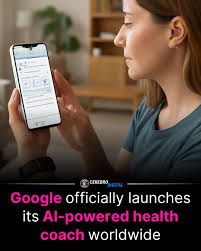
Google has expanded its digital health ecosystem with the launch of the new Google Health app, marking a major shift in the company’s wellness and fitness strategy. The app replaces the existing Fitbit application and combines health tracking, medical records, wellness insights and AI-powered coaching into a single platform.
The new app is designed to bring together data from multiple sources including Fitbit devices, Android health services, Health Connect and even Apple Health integrations. Users will be able to track activity, sleep, nutrition, heart health and medical records through a unified dashboard. Google says the move is aimed at simplifying health management while giving users a more complete picture of their physical wellbeing.
A major feature of the platform is the introduction of a Gemini-powered AI Health Coach. The AI assistant can analyse user data and provide personalised recommendations related to exercise, sleep, stress, nutrition and recovery. Google says the coach is designed to function as a virtual wellness guide by offering suggestions based on patterns in user behaviour and health data.
The app introduces a redesigned interface with four main sections — Today, Fitness, Sleep and Health. The “Today” tab provides a customisable overview of daily metrics and AI-generated insights, while the Sleep section offers more detailed analysis and improved sleep tracking. Fitness features include workout monitoring and activity summaries, while the Health section focuses on broader wellness data and medical information.
Google has also confirmed that the older Google Fit platform will gradually be phased out later this year as the company consolidates its health services under the Google Health brand. Existing Fitbit users will automatically receive the update without losing historical data or subscriptions. Fitbit branding, however, will continue for wearable devices such as fitness trackers and smartwatches.
The company has bundled Google Health Premium with its AI Pro and AI Ultra subscription plans. Premium users will gain access to advanced AI coaching, deeper health analytics and personalised wellness guidance. Standalone subscriptions are also expected to be available for users who only want health-related services.
Google has emphasised that health information collected through the app will not be used for advertising purposes. The company reiterated its earlier privacy commitments made during the Fitbit acquisition, stating that user wellness and medical data would remain separate from advertising systems.
The rollout has generated mixed reactions among users and technology communities online. Some users welcomed the unified experience and AI-powered features, while others expressed concern over the gradual disappearance of Google Fit and Fitbit’s simpler interface. Discussions on Reddit showed several users worrying about reduced activity tracking options and increasing dependence on premium subscriptions and wearable devices.
The launch reflects Google’s broader push into AI-driven consumer services and digital healthcare. Industry analysts believe the company is attempting to compete more directly with health ecosystems offered by competitors such as Apple and Samsung by combining wearable technology, AI and personal health data into a single connected platform.