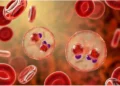

















Researchers have developed a promising blood test that could identify people at risk of developing lung cancer more than five years before the disease is diagnosed. The breakthrough is based on a unique “14-protein signature” found in blood samples, offering new possibilities for earlier detection, targeted screening, and even preventive treatment for one of the world’s deadliest cancers.
The study, published in the journal Cell, was led by scientists from the Francis Crick Institute and University College London (UCL). Using machine-learning techniques, researchers analyzed blood plasma protein data from more than 48,000 participants in the UK Biobank. By linking the biological data with cancer registry records, they identified 14 proteins that consistently appeared at elevated levels in individuals who later developed lung cancer.
Unlike many cancer tests that look for signs of an existing tumour, the newly identified protein signature appears to detect biological changes that occur long before cancer develops. Scientists found that the protein pattern reflects chronic inflammation in lung tissue, creating an environment that can promote the growth of cancer cells. This means the test may help identify high-risk individuals years before symptoms appear or tumours become detectable through conventional screening methods.
The researchers validated the findings across eight international datasets involving thousands of participants from different countries and backgrounds. Importantly, the protein signature was found not only in smokers but also in non-smokers, suggesting that the test could help identify lung cancer risk in people who would not normally qualify for current screening programmes. Existing screening guidelines largely focus on older adults with a significant smoking history, potentially missing a growing number of cases among non-smokers.
The study also sheds light on the role of inflammation in cancer development. Scientists discovered that environmental factors such as tobacco smoke and air pollution can activate inflammatory pathways in the lungs, leading to higher levels of the 14 proteins. This chronic inflammatory state appears to create favourable conditions for cancer formation, even before a tumour emerges. The findings support growing evidence that inflammation is a key driver of several forms of cancer.
In a significant development, researchers re-examined data from the CANTOS clinical trial, which evaluated the anti-inflammatory drug canakinumab. They found that participants with high levels of the 14-protein signature experienced nearly a 50 percent reduction in lung cancer risk when treated with the drug. This suggests that the protein signature could help identify people most likely to benefit from preventive therapies, paving the way for more personalised approaches to cancer prevention.
Experts believe the discovery could transform how lung cancer risk is assessed in the future. Instead of relying mainly on age and smoking history, healthcare providers may one day use biological markers in the blood to identify vulnerable individuals and intervene earlier. However, researchers caution that additional clinical studies are needed before the test can be introduced into routine medical practice.
If validated through further research, the blood test could become a powerful tool for reducing lung cancer deaths by enabling earlier screening, timely intervention, and targeted prevention strategies. As lung cancer continues to be a leading cause of cancer-related mortality worldwide, the findings offer hope for a future in which the disease can be identified and addressed long before it becomes life-threatening.