













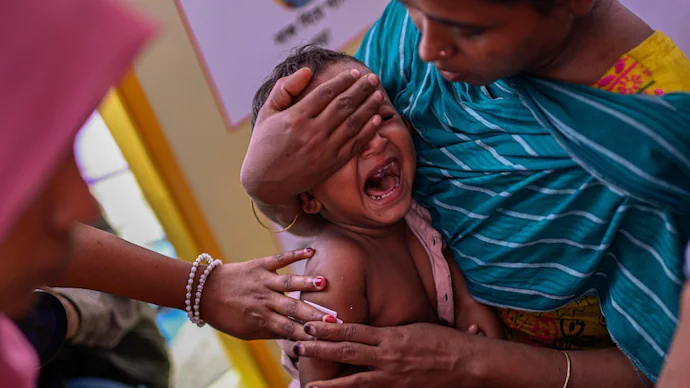
India has recorded a sharp rise in measles cases, raising fresh concerns over the country’s efforts to eliminate the highly contagious disease. According to the latest estimates released by the World Health Organization (WHO) and UNICEF, India reported 26,627 measles cases in 2025, making it one of the countries with the highest disease burden globally. Public health experts warn that persistent gaps in surveillance and immunisation coverage could delay India’s target of eliminating measles and rubella.
The increase comes despite significant progress made through routine immunisation programmes over the past decade. Health authorities have expanded vaccination campaigns and strengthened disease surveillance, yet experts say immunity gaps remain in several regions due to missed vaccinations, disruptions during the COVID-19 pandemic, and uneven healthcare access. These factors have left pockets of vulnerable children susceptible to outbreaks.
Although India has made notable strides in reducing measles cases in recent years, health specialists caution that national figures may not fully capture the true extent of infections. Incomplete reporting, delayed diagnosis, and variations in surveillance systems across states are believed to contribute to underreporting, making it difficult to accurately assess disease transmission and respond swiftly to outbreaks.
Measles remains one of the world’s most infectious viral diseases and can lead to severe complications, particularly among young children and individuals with weakened immune systems. While vaccination provides effective protection, maintaining high coverage is essential because the virus spreads rapidly in communities where immunisation rates fall below recommended levels. Health experts stress that achieving at least 95% coverage with two doses of the measles-rubella vaccine is necessary to interrupt transmission and prevent recurring outbreaks.
The WHO and UNICEF have repeatedly emphasised that routine immunisation must be complemented by strong surveillance systems capable of quickly identifying outbreaks and ensuring rapid response. In India, experts believe improving laboratory confirmation, disease reporting, and community-level monitoring will be critical for meeting elimination targets. Strengthening frontline healthcare services and reaching children in remote, urban poor, migrant, and underserved communities are also seen as key priorities.
India continues to implement nationwide immunisation initiatives, including Mission Indradhanush and the Measles-Rubella Elimination Campaign, aimed at increasing vaccine coverage among children. These programmes have contributed to substantial improvements in immunisation rates over the years, but health authorities acknowledge that sustained efforts are required to close existing coverage gaps and prevent future outbreaks.
Public health experts note that vaccine hesitancy, population mobility, and unequal access to healthcare continue to challenge immunisation programmes in certain districts. Addressing these issues will require stronger community engagement, awareness campaigns, and coordinated efforts between state governments, healthcare workers, and local administrations to ensure that every eligible child receives both doses of the vaccine.
With measles cases increasing both in India and several other countries, global health agencies are urging governments to strengthen routine vaccination programmes and improve outbreak preparedness. Experts believe that sustained investments in immunisation, surveillance, and healthcare infrastructure will be essential if India is to achieve its long-term goal of eliminating measles and protecting children from one of the world’s most preventable infectious diseases.