



















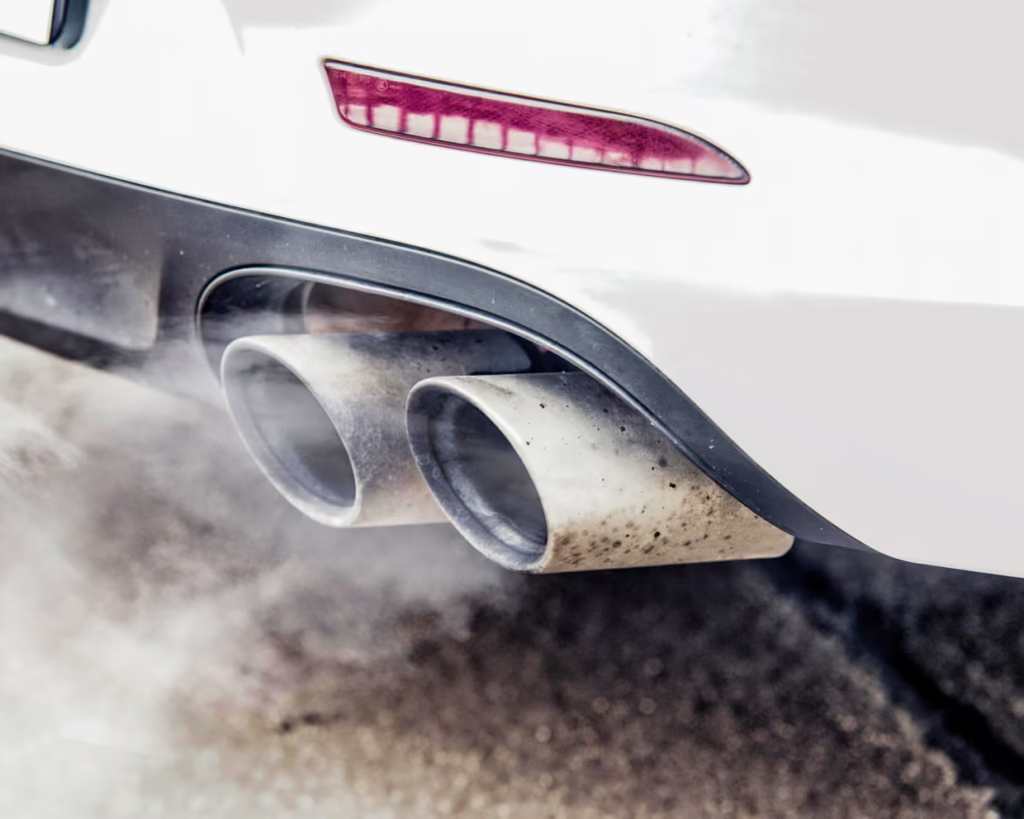
Exposure to air pollution may be associated with a higher risk of suicide and suicidal behaviour, according to an international review of research.
While previous research has connected environmental pollution with poorer mental health, its potential relationship with suicide has been less clearly understood. Researchers at Queen’s University Belfast investigated whether different forms of environmental pollution—including air, noise, light and water pollution—were associated with suicide deaths, suicide attempts and suicidal thoughts.
The researchers conducted a meta-analysis of 29 studies and found that exposure to fine particulate matter and nitrogen dioxide was associated with an increased risk of suicide, suicide attempts and suicidal ideation.
A further 16 studies were examined through a narrative analysis. These studies indicated that other pollutants, including sulphur dioxide and ozone, along with noise pollution, may also be associated with increased suicide risk. However, the evidence concerning light and water pollution was inconclusive.
The findings, published in the Journal of Epidemiology and Community Health, led the researchers to suggest that environmental pollution could be taken into account when developing suicide prevention strategies. They also argued that suicide prevention should be considered as part of a wider public health approach.
The researchers said the findings highlighted the importance of considering environmental exposures as potentially modifiable factors in suicide prevention. They suggested that incorporating environmental health into mental health policies—through cooperation across sectors, efforts to reduce pollution and targeted public health measures—could contribute to improving population mental wellbeing and potentially reducing suicide risk.
However, experts urged caution in interpreting the results.
Dr Jess Moody, senior research and evidence manager at Samaritans, said suicide has complex causes and that a range of factors can influence risk. She said the environments in which people live, including inequalities in living conditions, should not be overlooked, and welcomed research examining the relationship between suicide and broader public health issues.
Dr Jon Van Niekerk, chair of the general adult faculty at the Royal College of Psychiatrists, said the research indicated that certain types of air pollution could be linked to a small increase in suicidal behaviour. However, he stressed that the study did not demonstrate that air pollution directly caused suicidal thoughts or suicide attempts.
He noted that air pollution is closely linked with other factors that can affect mental health, including socioeconomic deprivation, urban environments, physical health and housing conditions. According to Van Niekerk, the research provides additional population-level evidence supporting efforts to reduce harmful air pollution, but should not be interpreted as evidence that pollution can be used to predict an individual’s suicide risk or that reducing pollution alone would prevent suicide.
Dr Rosie Cornish, a senior research fellow in epidemiology and health data science at the University of Bristol, also questioned whether the observed associations demonstrated a causal relationship. She pointed out that numerous factors are linked both to higher pollution levels and to increased suicide risk. If pollution itself is not responsible for the increased risk, she said, reducing pollution would not necessarily prevent suicide.
Dr Stephen Burgess, professor of biostatistics at the University of Cambridge, similarly distinguished between association and causation. He said areas with greater pollution may also differ in other characteristics that influence suicide risk. While the research identifies factors associated with increased suicide risk, he said additional research is required before those factors can be regarded as causes of that increased risk.
For more health-related news