
















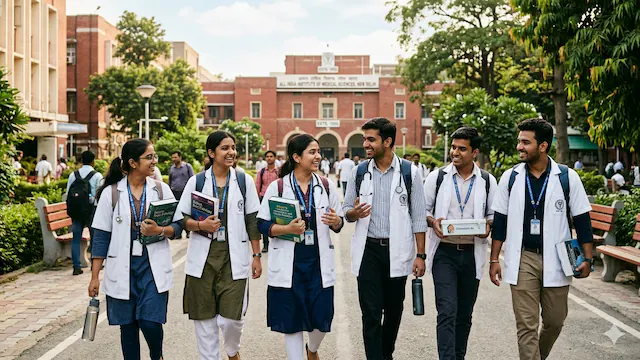
The National Medical Commission (NMC) has proposed extending the maximum time allowed for students to complete their MBBS degree from nine years to ten years, including the mandatory one-year Compulsory Rotating Medical Internship (CRMI). The proposed amendment, introduced through a draft notification under the Graduate Medical Education Regulations (GMER), 2023, aims to provide medical students with greater flexibility in completing their education while maintaining academic standards.
Under the current rules, MBBS students must complete the entire programme, including internship training, within nine years from the date of admission. The new proposal would extend this period by one additional year, allowing students more time to finish their coursework, examinations, and clinical training. If approved, the revised regulation will replace the existing provision and become part of the Graduate Medical Education (Amendment) Regulations, 2026.
The proposal comes as part of ongoing efforts to make medical education more adaptable to the challenges faced by students. Medical studies are widely regarded as one of the most demanding academic programmes, requiring years of rigorous classroom learning, practical training, and clinical exposure. Students may encounter personal, health-related, financial, or academic difficulties that can delay their progress. The additional year is expected to offer relief to those who need more time to complete the course without compromising their eligibility.
Importantly, the NMC has not proposed any change to the existing rule limiting students to four attempts for clearing the First Professional MBBS examination, which is conducted at the end of the first year. While the overall completion period may be extended, academic performance standards and examination requirements will remain unchanged. This reflects the regulator’s attempt to balance flexibility with the need to maintain quality in medical education.
The proposed amendment effectively restores an earlier framework that allowed a longer period for completing the MBBS programme. The nine-year limit introduced under GMER 2023 had raised concerns among some students and education stakeholders, particularly for those facing unavoidable interruptions during their studies. The restoration of a ten-year limit is being viewed as a more practical approach that accommodates exceptional circumstances while preserving professional standards.
The internship component remains a crucial part of the MBBS programme and continues to be included within the total completion period. The one-year internship provides hands-on clinical experience and is mandatory for obtaining registration as a medical practitioner. Medical education experts note that delays often occur during internship completion or due to interruptions between academic stages, making the additional year potentially beneficial for many students.
The proposal also gains significance in the context of recent regulatory reforms. Earlier this year, the NMC directed medical colleges not to charge tuition fees beyond the 4.5-year academic duration of the MBBS programme, clarifying that students should not be billed for the internship period. These measures indicate a broader effort by the commission to make medical education more transparent, student-friendly, and financially fair.
The NMC has invited feedback and suggestions from stakeholders before finalising the amendment. Once the consultation process is completed, the commission will review public responses and decide whether to formally implement the revised rule. If approved, the change could benefit thousands of current and future MBBS students across India by providing greater flexibility in completing their medical education journey.