












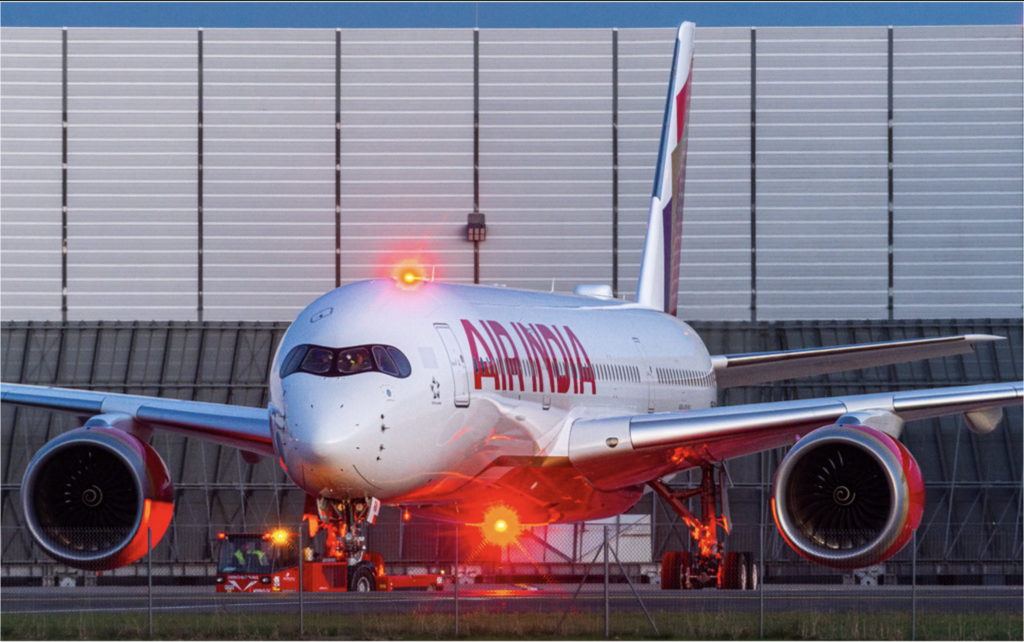
New Delhi: In a journey where every hour can matter, Air India is helping donated corneas travel across India and reach patients awaiting sight-restoring transplants. Through its partnership with the Eye Bank Association of India (EBAI), the airline transports donated corneas free of charge across its domestic network, supporting eye banks in overcoming distance and logistical challenges.
Between April 2025 and March 2026, Air India transported 431 corneas across India, helping ensure that donated tissue could reach eye banks and medical teams within the required timelines for corneal transplant procedures.

The process begins with an act of generosity. When a family agrees to donate the corneas of a loved one, medical teams recover and preserve the tissue. Eye-bank coordinators then identify suitable recipients and organise its movement to the required destination.
One such journey can begin at the L V Prasad Eye Institute’s Ramayamma International Eye Bank in Hyderabad and end at an eye bank in Bhubaneswar, such as the Drushti Daan Eye Bank. The tissue may travel hundreds of kilometres before reaching the patient who needs it.
When every minute matters
Corneas require careful handling and transportation within specific medical timelines. Air India’s partnership with EBAI provides free transportation and priority handling for donated corneas, helping reduce the logistical burden on eye banks and allowing medical teams to focus on tissue evaluation, matching and transplant preparation.
The small insulated container carrying a donated cornea can look like ordinary cargo at an airport. Yet inside is a gift that could help restore someone’s vision.
The process involves a chain of people working behind the scenes — donor families, doctors, eye-bank coordinators, airport teams, cargo handlers and airline employees. Their roles may be separated by hundreds of kilometres, but together they help connect a donor family’s final act of generosity with a patient’s hope of seeing again.
The 431 corneas transported in one year therefore represent more than a statistic. Each shipment marks a link between two lives — one touched by loss and generosity, and another waiting for the possibility of restored sight.
For more health-related news