
















India’s largest health survey, the National Family Health Survey (NFHS), continues to serve as a crucial tool for understanding the country’s health, nutrition, and demographic trends. The latest findings offer valuable insights into improvements in public health indicators while also drawing attention to important areas that remain unaddressed, raising questions about the completeness of the data available to policymakers and researchers.
Conducted under the supervision of the International Institute for Population Sciences and the Ministry of Health and Family Welfare, the NFHS is one of the world’s largest household surveys. Since its launch in 1992, it has tracked critical indicators related to maternal and child health, fertility, nutrition, family planning, and healthcare access across India. The survey has become a key reference point for evaluating government programmes and shaping public health strategies.
Recent NFHS findings indicate notable progress in several areas. Institutional deliveries have increased significantly, vaccination coverage among children remains high, and maternal healthcare services have expanded across the country. Improvements in child nutrition indicators, including reductions in stunting and severe wasting, suggest that targeted health and nutrition interventions are delivering positive outcomes. These trends point to gradual gains in healthcare accessibility and service delivery, particularly in rural and underserved regions.
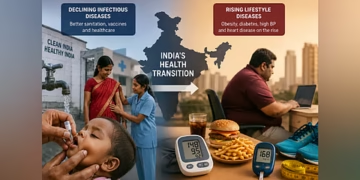
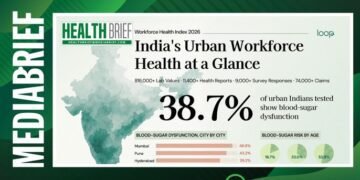
At the same time, the survey highlights emerging health challenges. Lifestyle-related diseases such as diabetes and obesity are becoming increasingly prevalent. Recent data suggest that a growing proportion of Indians are experiencing high blood sugar levels, underscoring the need for stronger preventive healthcare measures and greater focus on non-communicable diseases. Public health experts view this shift as evidence of India’s evolving disease burden, where chronic illnesses are increasingly replacing infectious diseases as major health concerns.
However, the latest survey has also sparked debate because several indicators included in previous editions are no longer part of the published factsheet. Omitted data points reportedly include information related to sex ratio, sex ratio at birth, mortality rates, access to sanitation facilities, clean cooking fuel usage, cancer screening, HIV awareness, and certain family planning indicators. The exclusion of these measures has prompted concerns among health researchers who rely on long-term data comparisons to assess policy effectiveness and identify emerging challenges.
Government officials have stated that many of these indicators are now being tracked through separate specialised surveys and administrative databases. According to this approach, the changes are intended to improve data harmonisation and reduce duplication across different government reporting systems. Nevertheless, some experts argue that the absence of these indicators from the NFHS could make it more difficult to obtain a comprehensive snapshot of public health conditions through a single nationally representative survey.
The discussion surrounding the NFHS reflects a broader challenge in public health governance: balancing the need for streamlined data collection with the importance of maintaining comprehensive and comparable datasets. While the survey continues to provide valuable evidence on healthcare progress and population health trends, the omission of certain indicators has reignited conversations about transparency, accountability, and the role of data in shaping effective public policy.
As India navigates evolving health priorities, the NFHS remains an essential resource for understanding both achievements and gaps in the healthcare landscape. Its findings will continue to influence policy decisions, programme implementation, and public health planning, making the quality and scope of the survey a matter of national importance.