












The global burden of gastrointestinal (GI) and liver diseases is rising, with nearly one in three people worldwide experiencing GI or liver disease-related symptoms. Experts also note that around one in two people is infected with Helicobacter pylori, while one in three is affected by intestinal worm infections.
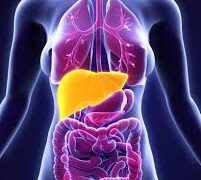
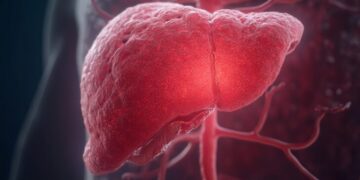
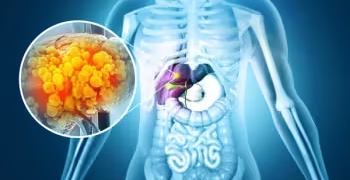
Fatty liver disease has emerged as one of the major health concerns, affecting nearly one in three people globally. GI cancers and autoimmune diseases are also increasing worldwide, including in India.
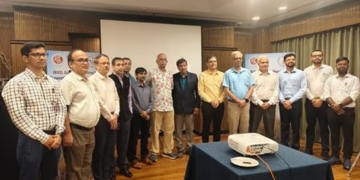
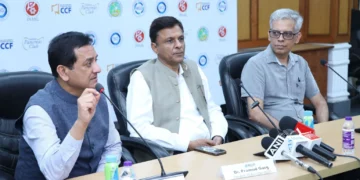
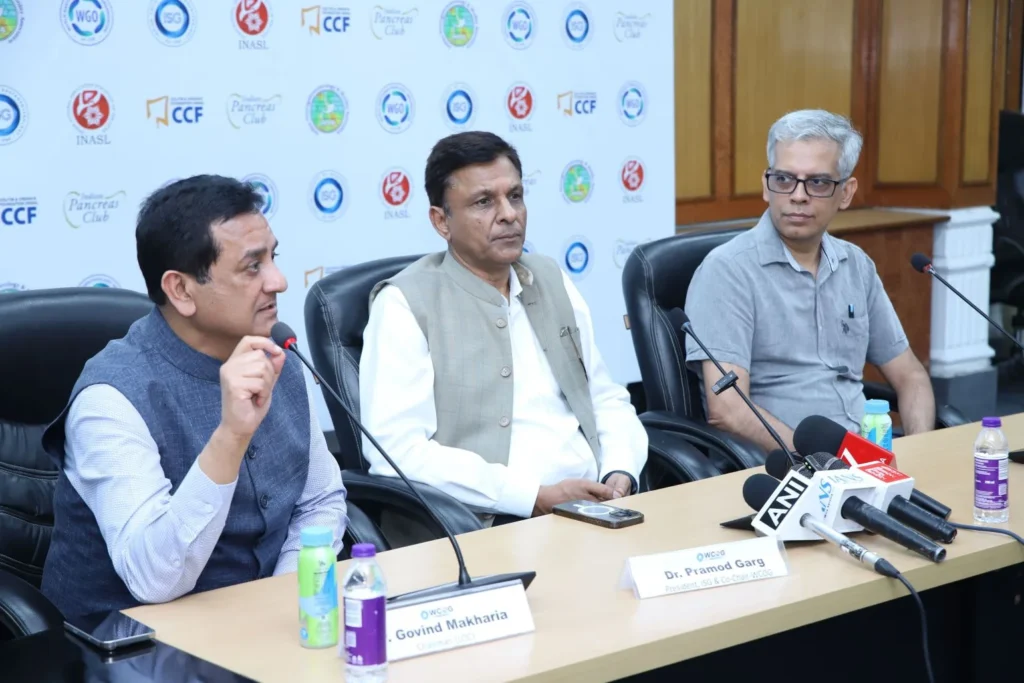
These concerns were highlighted by leading AIIMS gastroenterology experts, including Dr Pramod Garg, Professor and Head, Department of Gastroenterology and Human Nutrition, AIIMS, New Delhi; President, Indian Society of Gastroenterology and Co-Chair, Steering Committee, World Congress of Gastroenterology 2026 (WCOG 2026); Dr Govind Makharia, Professor, Department of Gastroenterology and Human Nutrition, AIIMS, New Delhi and Chairman, Local Organising Committee, WCOG 2026; Dr Shalimar, Professor, Department of Gastroenterology and Human Nutrition Unit, AIIMS, New Delhi; and Dr Vineet Ahuja, Professor, Department of Gastroenterology and Human Nutrition, AIIMS, New Delhi and Secretary General of the Crohn’s Colitis Foundation of India.

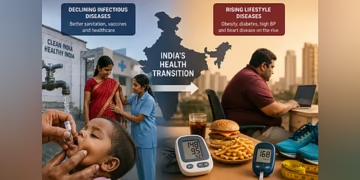
Fatty liver disease emerged as a key concern. An AIIMS-led systematic review and meta-analysis found the condition in 38.6 per cent of Indian adults and 35.4 per cent of Indian children. The disease is closely associated with diabetes, obesity and hypertension.
Despite its high prevalence, fatty liver disease can remain silent until significant liver damage has occurred. A recent study reported that one in four patients with type 2 diabetes has clinically significant liver fibrosis, highlighting the need for earlier detection.
India included fatty liver disease in its National Programme for Prevention and Control of Non-Communicable Diseases in 2021. Guidelines were subsequently issued to support its detection at the primary-care level.
The experts also highlighted colorectal cancer as a growing concern, with cases increasingly being diagnosed in younger adults. India recorded 40,430 new cases among men and 24,433 among women in 2022. Symptoms such as blood in the stool, persistent changes in bowel habits and unexplained weight loss should not be dismissed as routine gastrointestinal problems.
Persistent infections continue to add to India’s GI disease burden. H. pylori remains widespread and is associated with peptic ulcer disease and gastric cancer. Intestinal worm infections continue to affect children and can contribute to anaemia and undernutrition.
The experts also discussed celiac disease and inflammatory bowel disease (IBD), which are increasingly being recognised in India. Community-based research led by AIIMS found celiac disease in approximately one in 96 people in northern India.
Against this backdrop, India will host the World Congress of Gastroenterology from September 30 to October 3, 2026, at Yashobhoomi, the India International Convention and Expo Centre in Dwarka, New Delhi. The event will focus on the growing burden of digestive diseases and advances in early diagnosis and treatment.
This will be the first time India hosts the World Congress of Gastroenterology, offering an opportunity to showcase the country’s scientific and clinical contributions and foster new international collaborations.
Jointly hosted by the Indian Society of Gastroenterology (ISG), Indian National Association for the Study of the Liver (INASL), Crohn’s and Colitis Foundation of India (CCFI), Indian Pancreas Club (IPC) and Indian Neurogastroenterology and Motility Association (INMA), in partnership with the World Gastroenterology Organisation, WCOG 2026 will bring together gastroenterology experts from across the world.
The theme of the congress is “Transforming Gastrointestinal Health, Preserving Nature.”
The congress will focus on advances in diagnostics, endoscopy, therapeutics, the gut microbiome and AI-enabled healthcare, while also examining the changing global burden of gastrointestinal diseases.
For more health-related news
Follow Health in Five on LinkedIn & Facebook