
















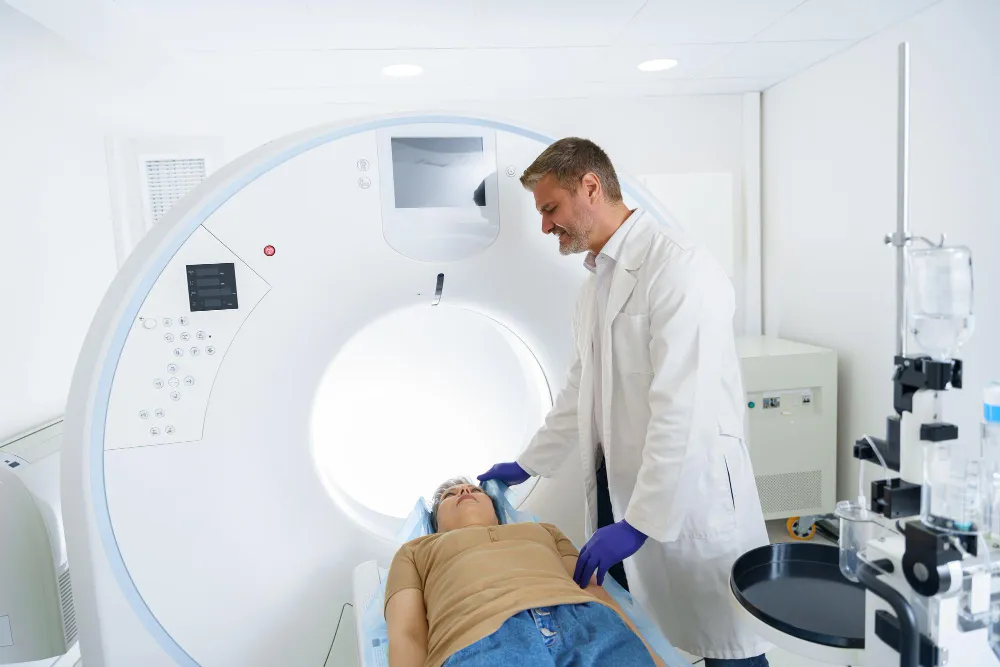
CT-guided core needle biopsy may provide a safe and effective diagnostic option for deep neck lesions that cannot be clearly reached or visualized using ultrasound, according to a recent study.
A recent study has highlighted the value of CT-guided core needle biopsy (CNB) for diagnosing difficult lesions in the deep neck. The research found that the technique achieved a 93.4% diagnostic yield, offering an important alternative when ultrasound-guided biopsy is not suitable.
The retrospective single-center study reviewed 122 biopsy procedures in 118 patients performed between January 2005 and August 2024. The patients had suspected neoplastic, inflammatory or infectious lesions in the head and neck that were difficult to access using ultrasound.
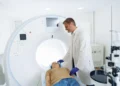
Why was CT guidance needed? Some deep neck lesions are located behind complex anatomical structures or cannot be adequately seen with ultrasound. In such cases, radiologists used CT imaging to guide an 18-gauge core needle precisely into the target lesion.
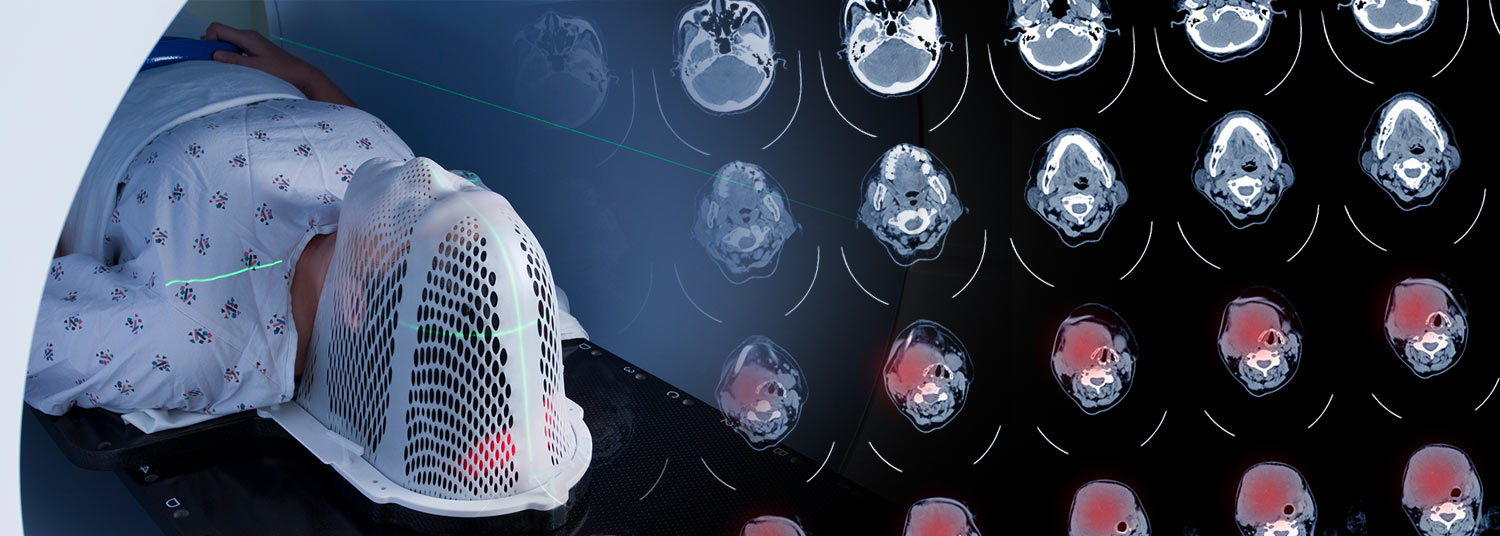
The procedures were mainly performed in the suprahyoid deep neck spaces, which accounted for 94.3% of cases. The remaining 5.7% involved lesions in the infrahyoid neck. Local anesthesia and sterile techniques were used, followed by immediate CT imaging to check for complications such as bleeding or injury to nearby structures.
The results showed a sensitivity of 86.2% and specificity of 100%. Most biopsies, about 73%, revealed benign conditions, with salivary gland tumors being the most common. Malignant findings accounted for 20.5% of cases, with metastatic tumors being the leading diagnosis.
The researchers also found that the size of the lesion did not significantly affect diagnostic success. This suggests that CT-guided CNB may be useful across a range of lesion sizes in anatomically challenging areas.
However, 6.6% of biopsies were inconclusive, and surgical confirmation was available for only 31% of cases. The researchers noted that further studies are needed to confirm the technique’s reliability across different clinical settings.
Overall, the findings suggest that CT-guided CNB can complement ultrasound-guided biopsy and expand diagnostic options for patients with difficult-to-access deep neck lesions.
For more health-related news