












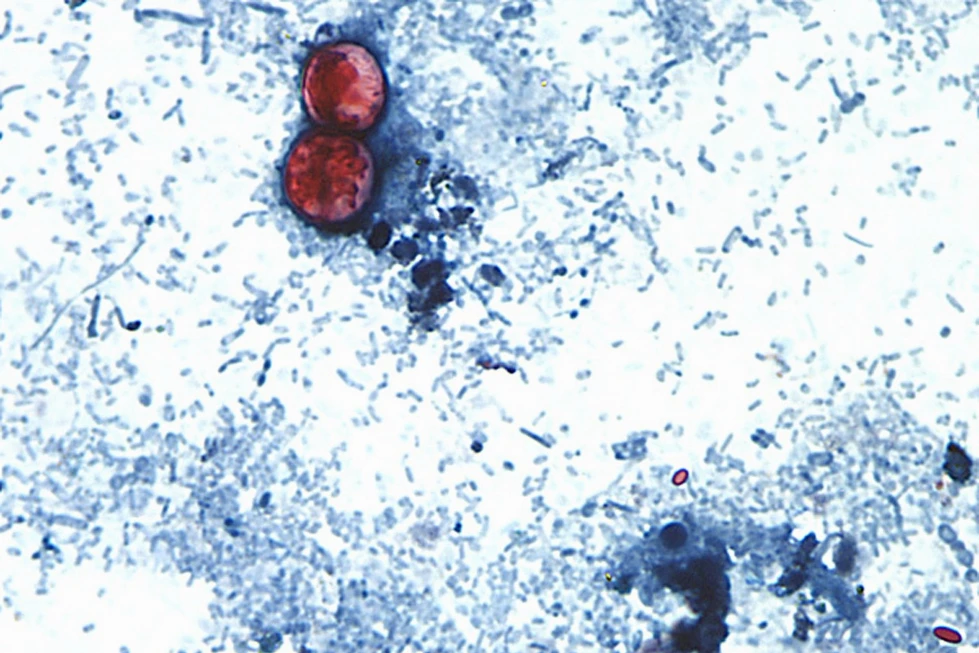
A nationwide outbreak of cyclospora infections connected to contaminated lettuce has increased concerns over the safety of imported food in the United States. The outbreak has also brought renewed attention to a continuing decline in inspections carried out by U.S. regulators at food facilities located overseas.
Records from the Food and Drug Administration show that inspections of foreign food facilities have fallen by nearly 35% since 2019, before the COVID-19 pandemic began. One of the facilities affected by this decline is the Mexican farm associated with the current cyclospora outbreak.
The pandemic caused the FDA to remove many inspectors from international fieldwork and contributed to a large number of retirements and employee departures. The agency has continued to experience difficulties replacing those workers.
However, the shortage of foreign inspections did not begin with the pandemic. The FDA had already been unable to meet inspection goals established by Congress for many years. Former FDA officials now warn that recent government workforce reductions, reorganizations and other changes under President Donald Trump could further weaken the agency’s ability to inspect foreign facilities.
Michael Rogers, a former FDA employee who worked in inspection-related positions for nearly 35 years, said the agency does not have sufficient resources to oversee all the companies operating under its jurisdiction, both inside and outside the United States. He nevertheless said the agency continues to perform many of its responsibilities well despite having limited resources.
The Trump administration has proposed alternative inspection strategies intended to make better use of the agency’s resources. One proposal involves conducting inspections lasting only one day. Rogers and other former FDA officials, however, argue that such brief visits cannot provide the same level of oversight as conventional inspections, which can take a week or longer when investigators need to examine serious problems in detail.
FDA officials have also emphasized that overseas inspections are not the agency’s only method of protecting the American food supply.
Susan Mayne, who previously led the FDA’s food program and now works at Yale University, said the sheer quantity of imported food makes it impossible for inspections alone to guarantee safety. The agency also uses inspections at U.S. borders, checks on importers, product sampling and other regulatory measures.
The cyclospora outbreak has nevertheless revealed problems with relying on these methods.
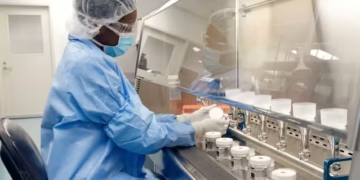
In July, the FDA had to withdraw a test result after discovering that a lettuce sample from Taylor Farms had been incorrectly identified as containing cyclospora. The sample had been collected at the border. Although the test was later found to be wrong, FDA officials continue to believe that the Taylor Farms facility was the source of the outbreak.
Mexican authorities have reached a different position. Their investigation has reportedly found no positive samples or other indications of contamination at the farm.
The Department of Health and Human Services said the FDA investigation remains active. The agency is also reviewing how many foreign inspections should be conducted each year in order to provide oversight similar to that applied to food produced domestically.
FDA inspectors arrived weeks after the recall
FDA investigators visited the Taylor Farms facility in Guanajuato, Mexico, in the middle of August, roughly four weeks after the company announced its recall on July 17.
The visit was significant because FDA inspectors had not examined the facility since 2019. That year represented the highest point for foreign food inspections before the pandemic caused the agency to withdraw much of its overseas inspection workforce.
Inspection numbers have not returned to their earlier levels. This decline extends beyond food facilities and also affects overseas inspections involving drugs, medical devices and other products.
Foreign food inspections dropped another 17% in fiscal year 2025, when the FDA conducted 1,140 inspections compared with the previous year.
Although FDA inspectors themselves were not part of the approximately 3,500 positions targeted for elimination by the Trump administration, the agency reduced its workforce responsible for arranging employee travel by more than half. Inspectors have consequently had to take on more of the administrative work involved in organizing their own trips, including booking flights and accommodation.
Food safety specialists have criticized the length of time it took investigators to reach the Mexican farm. Given the number of illnesses and the nature of the outbreak, they argue that investigators should have been on-site sooner.
Frank Yiannas, a former senior FDA food safety official, said the agency’s response should have been faster. He noted that fresh-produce outbreaks require rapid investigation because the conditions surrounding farms and contamination can change quickly.
The Taylor Farms recall affected thousands of packaged salads containing iceberg lettuce and other vegetables. These products were distributed to several large restaurant chains, including Taco Bell, Pizza Hut and KFC, all owned by Yum Brands.
The number of food recalls has also remained high. FDA data show that more than 480 food recalls have been announced during the current fiscal year. This number has already exceeded the totals recorded during four of the previous five years.
Congressional inspection goals remain out of reach
The United States has been attempting to strengthen food safety oversight for many years.
Congress passed the Food Safety Modernization Act in 2011 after several serious foodborne illness outbreaks involving products such as spinach and cantaloupe. The legislation introduced new requirements covering areas such as food testing, worker training and farm sanitation.
It also established specific targets for inspecting foreign food facilities.
Under the law, the FDA is expected to conduct inspections at more than 19,000 international food facilities every year. Yet the agency has never come close to that number.
The highest annual total was approximately 1,700 inspections in 2019, according to the Government Accountability Office. That represented less than 10% of the target set by Congress.
Former FDA officials say reaching 19,000 inspections annually is unrealistic because the program has never received enough funding. The agency’s food safety budget has remained largely flat for years.
The GAO has also observed that the FDA has not established its own appropriate annual inspection target.
Staffing is another major challenge.
The FDA’s food inspection workforce consists of more than 420 employees, but roughly 10% to 15% of those positions have historically remained vacant, according to the GAO and former FDA employees.
International inspection work can require employees to spend at least half of their working time traveling. The demanding nature of the job has contributed to difficulties retaining experienced investigators.
Rogers said the agency needs to provide stronger incentives for inspectors to remain in their positions. Without better retention, he warned, the FDA could continue losing experienced investigators and replacing them with younger employees who have less experience. That could affect the agency’s ability to expand its inspection efforts.
Technology could provide additional oversight
Some food safety experts believe technology could help the FDA address its limited inspection resources.
Possible alternatives include machine-learning technology and remote monitoring systems that could allow regulators to observe supplier practices without requiring investigators to travel to every facility.
Yiannas said the United States needs to rethink its approach to monitoring overseas food producers. In his view, regulators cannot continue relying on the same limited methods that have been used for decades.
Another part of the 2011 food safety law focused on traceability. The legislation called for manufacturers to place bar codes on batches of produce so that contaminated products could be identified and traced more quickly during an outbreak.
The requirement was scheduled to take effect in January after years of negotiations and changes involving the produce industry. However, the FDA postponed the implementation again after receiving opposition from industry groups.
Brian Ronholm, a former Agriculture Department official who now works for Consumer Reports, acknowledged that improving food traceability is complicated. However, he argued that the industry and regulators have had many years to prepare for the requirement and should have been ready to put it into practice.
For more health-related news