











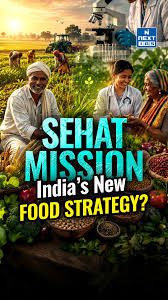
India is taking a significant step towards strengthening nutritional security through Mission SEHAT, an initiative designed to bring agriculture and healthcare closer together. The programme seeks to address the growing challenges of malnutrition, micronutrient deficiencies, obesity, and lifestyle-related diseases by aligning food production systems with public health goals. Launched jointly by the Indian Council of Agricultural Research (ICAR) and the Indian Council of Medical Research (ICMR), the mission reflects a shift from focusing solely on food availability to ensuring access to nutritious and health-promoting food.
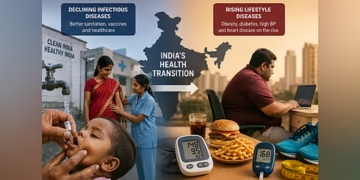
Over the past several decades, India has achieved remarkable success in increasing foodgrain production and strengthening food security. However, experts have increasingly highlighted that adequate food supply does not automatically guarantee good nutrition. Concerns have emerged regarding the declining nutrient content of some modern crop varieties and the persistence of malnutrition despite improved agricultural output. At the same time, the country is witnessing a rise in non-communicable diseases such as diabetes, hypertension, obesity, and cardiovascular disorders, many of which are closely linked to dietary habits and nutritional imbalances.
Mission SEHAT aims to address these interconnected challenges through a coordinated approach involving agricultural research, nutrition science, and public health interventions. The initiative seeks to encourage the production and consumption of nutrient-rich foods while promoting preventive healthcare strategies. Rather than concentrating primarily on treating diseases after they occur, the mission advocates a proactive model focused on improving health through better nutrition and healthier food systems.
A major component of the mission is the promotion of biofortified crop varieties that naturally contain higher levels of essential micronutrients such as iron, zinc, and vitamins. These crops are expected to help combat “hidden hunger,” a condition caused by deficiencies in vital nutrients despite sufficient calorie intake. The programme also encourages greater cultivation and consumption of nutrient-dense grains such as millets and ragi, which are recognised for their health benefits and nutritional value.
Another important aspect of the initiative is the promotion of integrated farming systems. By combining crop cultivation with activities such as horticulture, livestock rearing, fisheries, beekeeping, and poultry farming, the mission aims to diversify food production, improve household nutrition, and enhance farmers’ incomes. Such integrated models are expected to contribute to more balanced diets while supporting sustainable agricultural practices.
The mission also focuses on reducing the burden of lifestyle diseases by encouraging healthier dietary choices and increasing awareness about functional and nutritious foods. Efforts will be made to discourage excessive dependence on highly processed and unhealthy food products. Additionally, the programme seeks to improve occupational health and safety for farmers by reducing exposure to hazardous chemicals and promoting safer agricultural practices.
Mission SEHAT further embraces a broader “One Health” approach that recognises the interconnectedness of human, animal, and environmental health. Through collaborative research and policy development, the initiative aims to create evidence-based solutions that improve nutrition, strengthen public health, and support sustainable development.
By bridging the gap between agriculture and healthcare, Mission SEHAT seeks to redefine India’s approach to nutritional security. The initiative has the potential to improve health outcomes, reduce disease risks, and ensure that agricultural progress translates into better nutrition and well-being for the population.