














Plant-Based Fats Linked to Lower Death Risk After Prostate Cancer
For men who survive prostate cancer, what they eat may play an important role in their long-term health. Although 5-year relative survival rates for localized and regional prostate cancer are above 99%, survivors can still face risks from cardiovascular disease and other cancers.
A new study from researchers at the Harvard T.H. Chan School of Public Health has explored whether the type and source of dietary fat consumed after a nonmetastatic prostate cancer diagnosis could influence the risk of death.
The researchers found that men who replaced animal-based and saturated fats with plant-based and unsaturated fats had a lower risk of dying from any cause. Much of this difference appeared to be related to fewer deaths from cardiovascular disease and cancers other than prostate cancer.
In contrast, men who consumed the highest amounts of saturated fat from animal foods, including red meat, butter, and full-fat dairy products, had a 24% higher risk of death from any cause compared with men who consumed the least.
Looking at different types of dietary fat
Prostate cancer is among the most frequently diagnosed cancers in men in the United States. According to the American Cancer Society, approximately 1 in 8 men will develop prostate cancer during their lifetime.
For the study, researchers examined nearly 5,000 men who had been diagnosed with nonmetastatic prostate cancer over a 32-year period.
The men were participants in the Health Professionals Follow-Up Study, a long-running research project that monitors the health of male healthcare professionals in the U.S.The average age at prostate cancer diagnosis was about 70 years, while the median follow-up period was 12.8 years.
Every four years, participants completed dietary questionnaires detailing how frequently they had consumed various foods during the previous year. Researchers used these responses to estimate their intake of saturated, monounsaturated, polyunsaturated, and trans fats.
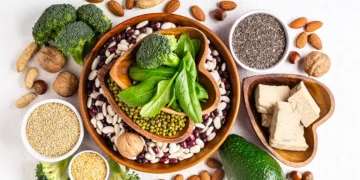
They also determined whether the fats primarily came from animal or plant sources. Plant foods such as nuts, seeds, and olive oil are important sources of monounsaturated and polyunsaturated fats.
Researchers then tracked deaths from all causes, including prostate cancer, cardiovascular disease, other cancers, and other causes.
The analysis took into account several factors that could affect mortality, including age, cancer treatment, BMI, and lifestyle habits.
Higher saturated fat intake tied to greater mortality
Over the course of the study, 3,040 men died. Of these deaths, 803 were attributed to cardiovascular disease, 499 to cancers other than prostate cancer, and 441 to prostate cancer.
Men who consumed the most saturated fat had a 24% higher risk of dying from any cause compared with those who consumed the least.
Their risk of dying from cardiovascular disease was also 42% higher.
The researchers also looked at what happened when calories from one type of fat were replaced with calories from another.
They found that replacing 10% of total daily calories from animal fat with plant-based fat was associated with a 16% lower risk of death from any cause.
Similarly, replacing saturated fat with monounsaturated fat was associated with a 20% reduction in the risk of death from any cause.
What could explain the benefits of plant fats?
Lorelei Mucci, ScD, MPH, a professor of epidemiology at the Harvard T.H. Chan School of Public Health and one of the study authors, told Medical News Today that several biological processes could contribute to the findings.
Rather than one specific mechanism, she suggested that multiple pathways may work together.
These could include effects on inflammation, LDL cholesterol, metabolism, and the development of atherosclerosis.
Mucci also pointed out that the potential advantages of plant-based fats may not come from fat alone. Previous research involving the same study group found that healthier overall eating patterns were associated with lower mortality among men with prostate cancer.
“Fat composition is likely one component, but not the sole factor underlying the benefits of plant-based fats,” Mucci explained.
She added that plant-based foods have also been associated with lower levels of inflammatory markers and improved insulin and metabolic health.
Importantly, the study did not find a connection between any of the dietary fats examined and the risk of dying specifically from prostate cancer.
The findings therefore suggest that choosing unsaturated fats instead of saturated fats may be particularly relevant for protecting cardiovascular health and improving overall longevity after prostate cancer.
A plant-forward approach may be beneficial
S. Adam Ramin, MD, a board-certified urologist and urologic oncologist in Los Angeles, told Medical News Today that the findings do not necessarily mean prostate cancer survivors need to follow a completely vegan diet.
Instead, he described the approach as “plant-forward,” with healthy plant foods and fats taking a more central role in meals.
According to Ramin, plant-based foods provide fiber and compounds such as lycopene and isoflavones, which may support metabolic health and help control inflammation.
A diet rich in fiber may also promote a healthier gut microbiome, which plays an important role in immune function.
A plant-focused eating pattern could also help reduce the risk of cardiovascular disease and diabetes, both of which can influence long-term health and survival after a nonmetastatic prostate cancer diagnosis.
Ramin encouraged people to make healthier choices at meals by eating more plant foods, limiting red meat, and choosing healthier sources of fat.
Why the findings need to be interpreted carefully
Ramkishen Narayanan, MD, a board-certified urologist and urologic oncologist, told Medical News Today that the study supports existing advice emphasizing healthy eating and cardiovascular health among prostate cancer survivors.
The large number of participants and long follow-up period are strengths of the research. However, because the study was observational, it cannot prove that consuming more animal or saturated fat directly caused a higher risk of death.
Narayanan said the findings alone are not enough to justify a major change in clinical practice. Still, he emphasized that diet remains an important part of maintaining cardiovascular health and promoting long-term longevity.
Overall, the research suggests that after a nonmetastatic prostate cancer diagnosis, shifting from animal-based and saturated fats toward plant-based and unsaturated fats may be associated with better overall survival—particularly through improved cardiovascular health.
For more health-related news