
















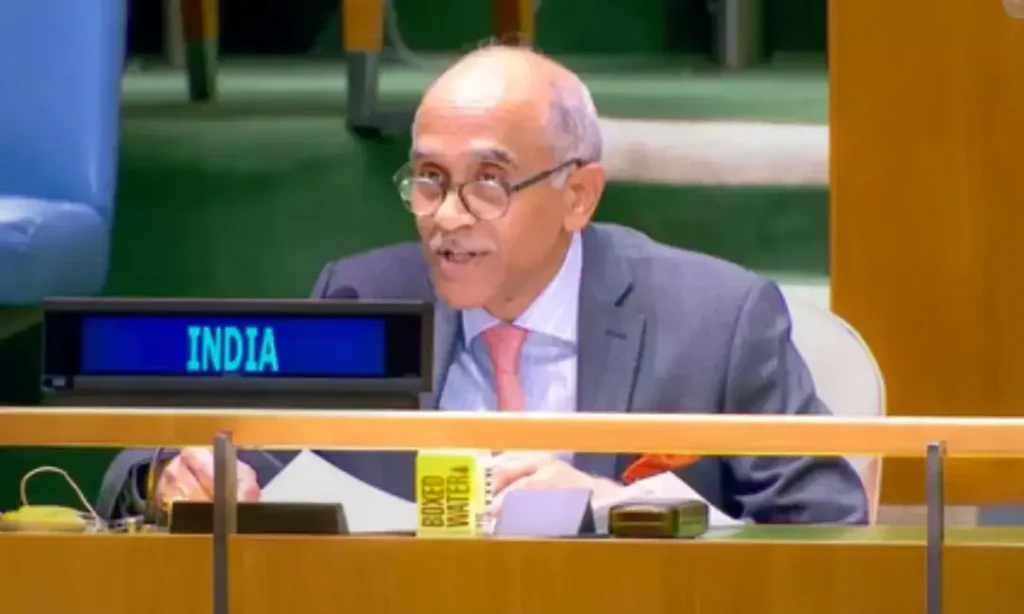
India has reiterated its commitment to ending AIDS as a public health threat by 2030, emphasizing its determination to strengthen global efforts against HIV/AIDS through sustained partnerships, innovation, and inclusive healthcare strategies. The commitment was conveyed by India’s Permanent Representative to the United Nations, Ambassador Harish Parvathaneni, during the United Nations High-Level Meeting on HIV/AIDS.
Addressing the gathering, Ambassador Parvathaneni highlighted India’s progress in combating HIV/AIDS and underscored the country’s resolve to accelerate action in line with the Sustainable Development Goals. He noted that India remains committed to working closely with UN agencies, member states, and development partners to ensure that the global response to HIV remains effective and people-centered.
The ambassador emphasized that India has adopted a comprehensive approach to HIV prevention, testing, treatment, and care. Over the years, the country has significantly expanded access to life-saving antiretroviral therapy, strengthened public awareness campaigns, and improved healthcare delivery systems to support people living with HIV. These efforts have contributed to a steady decline in new infections and AIDS-related deaths.
India also highlighted the importance of community-led interventions and inclusive healthcare policies in achieving long-term success. According to the country’s statement, targeted outreach programmes, awareness initiatives, and improved healthcare infrastructure have played a crucial role in reaching vulnerable and high-risk populations. The government continues to prioritize equitable access to prevention and treatment services across the country.
The High-Level Meeting comes at a critical juncture for the global HIV response. International organizations have warned that progress made over the past two decades could be threatened by funding challenges, health inequalities, and disruptions to essential healthcare services. Global leaders attending the meeting are seeking renewed commitments and stronger collaboration to ensure that the goal of ending AIDS by 2030 remains achievable.
India stressed that scientific advancements, improved diagnostics, and innovative treatment options offer significant opportunities to accelerate progress. However, these benefits must be made accessible to all populations, particularly in low- and middle-income countries. The country called for greater international cooperation, technology sharing, and resource mobilization to strengthen healthcare systems and improve outcomes for affected communities worldwide.
The Indian delegation also reaffirmed support for multilateral efforts aimed at addressing health challenges through collective action. It emphasized that ending AIDS requires a coordinated global response that combines political commitment, adequate financing, scientific innovation, and community participation. India pledged to continue contributing to international initiatives designed to expand access to prevention, treatment, and care services.
The United Nations High-Level Meeting on HIV/AIDS serves as an important platform for reviewing progress, identifying challenges, and shaping future strategies for the global HIV response. As countries work toward the 2030 target, India’s reaffirmation of its commitment reflects its intention to remain an active partner in the international effort to eliminate AIDS as a public health threat and ensure healthier, more resilient societies.