


















India is accelerating the digital transformation of its traditional healthcare ecosystem through the continued expansion of the Ayush Grid, a comprehensive digital platform designed to modernise AYUSH services and integrate them with the country’s broader digital health infrastructure. The initiative is expected to improve access, interoperability, and efficiency across Ayurveda, Yoga and Naturopathy, Unani, Siddha, Sowa-Rigpa, and Homoeopathy systems while supporting the government’s vision of a digitally connected healthcare ecosystem.
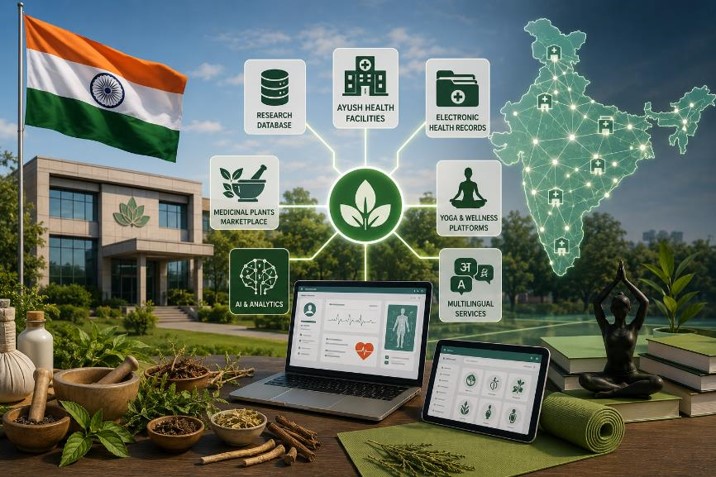
Developed by the Ministry of AYUSH, the Ayush Grid serves as the digital backbone for the sector, connecting healthcare providers, educational institutions, researchers, regulators, medicinal plant databases, and citizens through a unified platform. By digitising healthcare records, streamlining hospital management, and enabling data-driven decision-making, the platform aims to make AYUSH services more accessible and efficient for millions of users across the country.
A key aspect of the initiative is its integration with the Ayushman Bharat Digital Mission (ABDM), enabling seamless exchange of health information while ensuring interoperability with India’s wider digital health ecosystem. The integration allows citizens to access digital health services more conveniently and supports healthcare professionals with electronic health records, standardised treatment protocols, and improved patient management systems.
The Ayush Grid operates through a four-layer architecture comprising the Core Layer, National Layer, State Layer, and Citizen Access Layer. This structure enables digital connectivity from central government agencies to state departments, healthcare institutions, practitioners, and end users. It also provides flexibility for states and institutions to adopt digital solutions suited to their specific operational requirements while remaining connected to a common national framework.
Several digital platforms have already been developed under the Ayush Grid umbrella. These include the Ayush Hospital Management Information System (A-HMIS) for digital hospital administration, the Ayush Research Portal for knowledge sharing, the e-Learning Management System (e-LMS) for education and capacity building, and the NAMASTE Portal to strengthen governance and programme implementation. Together, these platforms support clinical services, research, education, regulation, and administrative functions across the AYUSH ecosystem.
The Ministry is also focusing on emerging technologies to further enhance digital healthcare delivery. Recent initiatives include upgrading hospital information systems, developing citizen-centric mobile applications, introducing AYUSH-specific APIs for public-private integration, and exploring artificial intelligence-based tools such as clinical decision support systems and chatbots. These innovations are expected to improve service delivery, operational efficiency, and evidence-based healthcare while creating opportunities for collaboration with global institutions.
Government officials believe the initiative will strengthen healthcare governance by improving transparency, monitoring, and data management across the sector. Digitalisation is also expected to facilitate research, promote standardisation of treatment protocols, and improve collaboration among practitioners, researchers, educational institutions, and policymakers. By creating a unified digital ecosystem, the Ayush Grid seeks to bridge longstanding gaps in information sharing and service delivery within the traditional medicine sector.
As India continues to expand its digital public infrastructure, the Ayush Grid represents a significant step towards integrating traditional systems of medicine into the country’s broader healthcare framework. By combining digital technologies with centuries-old healthcare practices, the initiative aims to improve accessibility, enhance patient care, and support innovation while positioning AYUSH as an integral component of India’s evolving digital health ecosystem.