











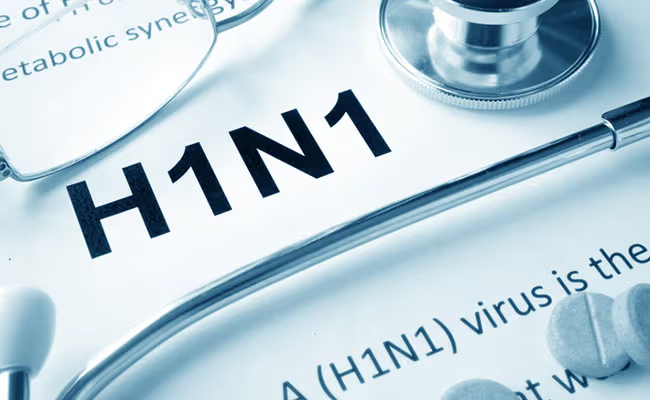
After a 62-year-old woman from Ujjain died after testing positive for H1N1 (swine flu), the Madhya Pradesh Health Department initiated a high-level investigation and delivered a show-cause notice to a private hospital in Indore.
The private hospital was treating the woman, who lived in Ujjain. Nevertheless, on August 18, she was released from the hospital and went back to her Ujjain house in defiance of the physicians’ instructions. The next day, August 19, she passed away.
In a notification released on Thursday, Madhav Prasad Hasani, the Chief Medical and Health Officer (CMHO) of Indore, explained the events that followed media reports regarding the death of a Ujjain woman.
According to Hasani, a 60-year-old Ujjain woman was undergoing treatment at an Indore hospital. She left the hospital on August 18, 2026, and went back to her Ujjain home, according to the official release. On August 19, 2026, she passed away at home.
Additionally, the CMHO emphasized that the hospital had not reported the matter to the Health Department. In response to the reports, Hasani established a three-person committee to look into the situation and sent the hospital a show-cause notice. Virendra Rajgeer, Anshul Mishra, and Abhishek Nigam make up the team. In order to formally establish the case’s facts, the committee has been directed to conduct a thorough investigation and present its conclusions.
The woman was released from the hospital against medical advice after testing positive for H1N1, also known as swine flu, according to earlier media accounts. She later passed away at home.
The Health Department emphasized that private hospitals must report instances of H1N1 under the Integrated Disease Surveillance Program (IDSP) because it is a notifiable disease. Action under the Nursing Home Act has been taken as a result of the alleged neglect to disclose the case.
Hasani also noted that increasing humidity during the monsoon months of June, July, and August frequently results in an increase in viral infections. He emphasized that in order to safeguard public health, prompt reporting and efficient surveillance are crucial.
The Health Department will decide whether to take any additional action against the hospital after the investigative committee has determined the case’s facts. The situation is still being closely watched by health authorities.