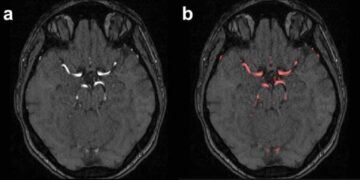







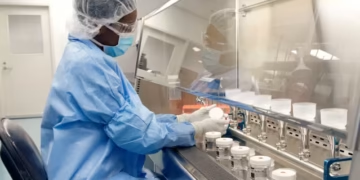

Artificial intelligence is changing healthcare by combining clinical, imaging and molecular data to help doctors understand patients more deeply, detect disease earlier and potentially predict health risks.
Artificial intelligence (AI) is reshaping medical diagnostics, moving healthcare beyond simply identifying diseases toward understanding why a disease is happening, how it may develop and how treatment could be personalised.
Traditionally, diagnosis has relied on individual pieces of information, such as microscope images, scans, laboratory results or genetic changes. Today, AI can help connect these different sources of information and provide a more complete picture of a patient’s health.
This is especially important in cancer care, where a single patient can produce large amounts of data from radiology, digital pathology, genomic testing, blood tests and clinical records. The challenge is increasingly not collecting data but understanding it.

India is already using AI in several areas of diagnostics. Qure.ai’s qXR analyses chest X-rays and has been used in tuberculosis screening. A large AI-assisted community TB screening programme in Delhi screened more than 168,000 people and identified 877 bacteriologically confirmed TB cases.
In breast health, NIRAMAI’s Thermalytix uses thermal imaging and AI to identify breast abnormalities without radiation. Meanwhile, SigTuple’s Shonit uses AI-assisted digital morphology to help identify and classify blood cells while keeping experts involved in the process.
The next stage could involve combining multiple types of health information. Platforms such as Jivana’s Synthesis aim to bring together multi-omics data, demographics, blood markers and other health information to create a more integrated picture of an individual’s biology.
AI could also help make healthcare more affordable by supporting earlier diagnosis, reducing unnecessary tests, prioritising urgent cases and helping specialists manage large patient volumes. An Indian health technology assessment found that AI-assisted chest X-ray interpretation for tuberculosis could improve detection while reducing costs.
However, experts stress that patients must remain at the centre of AI-driven healthcare. Genetic information, medical records and diagnostic images are highly sensitive and require strong privacy and security protections.
The future is therefore unlikely to be about AI versus doctors. AI can offer speed and pattern recognition, while doctors provide clinical judgement, context, empathy and accountability.
The goal is not simply to see disease more accurately, but to understand each patient more completely.
For more health-related news